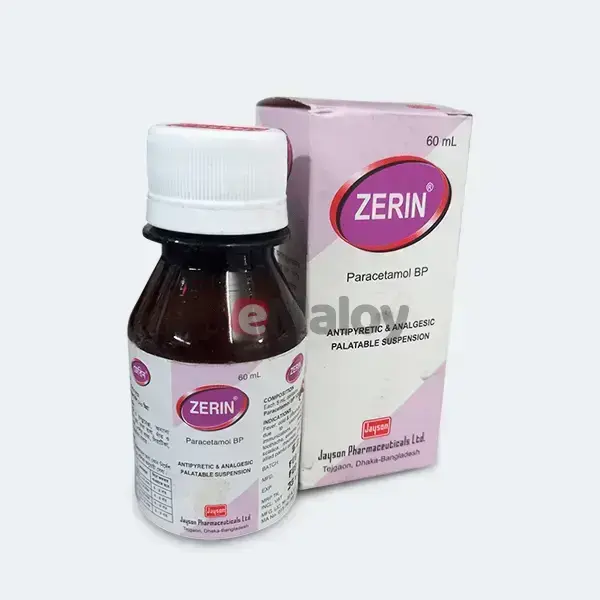
Zerin 60ml is an oral suspension containing Paracetamol (Acetaminophen) 120 mg/5 ml. It is manufactured by Jayson Pharmaceutical Ltd. in Bangladesh.
Indications
Zerin (Paracetamol) is a widely used analgesic (pain reliever) and antipyretic (fever reducer). It is indicated for:
- Fever: Including fever associated with common cold, influenza, and post-vaccination pyrexia (fever after vaccination) in children.
- Pain: Mild to moderate pain, including:
- Headache
- Toothache
- Earache
- Body ache
- Myalgia (muscle pain)
- Neuralgia (nerve pain)
- Dysmenorrhea (menstrual cramps)
- Sprains
- Colic pain
- Back pain
- Post-operative pain
- Postpartum pain (after childbirth)
- Inflammatory pain
- Rheumatic and osteoarthritic pain and stiffness of joints.
Pharmacology
Paracetamol works primarily in the central nervous system (CNS) to relieve pain and reduce fever. Its exact mechanism is not fully understood, but it is thought to act by inhibiting cyclooxygenase (COX) enzymes (COX-1, COX-2, and COX-3) involved in prostaglandin synthesis within the CNS. Prostaglandins are chemicals that contribute to pain and fever. Unlike NSAIDs, paracetamol has weak anti-inflammatory effects in peripheral tissues.
Dosage and Administration
Zerin Oral Suspension is for oral administration. Dosing is based on age and body weight, especially for children. It can be taken with or without food.
- Children under 3 months: 10 mg/kg body weight (reduce to 5 mg/kg if jaundiced) 3 to 4 times daily. For post-immunization pyrexia in children aged 2-3 months, 60 mg (0.5 teaspoonful) may be given, with a second dose after 4-6 hours if necessary.
- Children 3 months to below 1 year: ½ to 1 teaspoonful (60-120 mg) 3 to 4 times daily.
- Children 1-5 years: 1-2 teaspoonfuls (125-250 mg) 3 to 4 times daily.
- Children 6-12 years: 2-4 teaspoonfuls (250-500 mg) 3 to 4 times daily.
- Adults: 4-8 teaspoonfuls (500 mg - 1 gm) 3 to 4 times daily.
Important: Do not exceed the recommended dose or frequency. For long-term treatment, it is generally advised not to exceed a daily dose of 2.6 gm.
Side Effects
Paracetamol is generally well-tolerated at therapeutic doses. Side effects are rare but can include:
- Rare: Allergic reactions (e.g., skin rash, itching, swelling), blood disorders (thrombocytopenia, leucopenia, pancytopenia, neutropenia, agranulocytosis).
- Very rare (but potentially fatal): Severe skin reactions like Stevens-Johnson syndrome, toxic epidermal necrolysis, acute generalized exanthematous pustulosis, and acute renal tubular necrosis.
- Overdose: The most serious side effect is liver damage (hepatotoxicity), which can be severe and life-threatening, especially with overdose.
Contraindications
- Known hypersensitivity to Paracetamol or any component of the formulation.
- Severe liver impairment.
Precautions and Warnings
- Liver Damage: Caution is advised in patients with chronic alcoholism, known G6PD deficiency, severe hypovolemia, and chronic malnutrition. Patients with liver or kidney impairment should use paracetamol with caution and under medical supervision.
- Overdose: Accidental or intentional overdose can cause severe and irreversible liver damage. Do not take other paracetamol-containing products concurrently.
- Alcohol: Avoid excessive alcohol consumption while taking paracetamol, as it increases the risk of liver damage.
Pregnancy and Lactation
- Pregnancy: Paracetamol is considered generally safe for use during pregnancy when used at recommended doses for the shortest necessary duration. However, always consult a doctor.
- Lactation: Paracetamol is excreted into breast milk in small amounts, but it is generally considered safe for use by nursing mothers at recommended doses.
Drug Interactions
- Anticonvulsants (e.g., Phenytoin, Barbiturates, Carbamazepine): May reduce serum levels of paracetamol.
- Warfarin and other Coumarins: Prolonged use of paracetamol may enhance the anticoagulant effect, increasing the risk of bleeding.
- Metoclopramide and Domperidone: May accelerate the absorption of paracetamol.
- Probenecid: May increase serum levels of paracetamol.
- Chloramphenicol: May increase serum levels of chloramphenicol.
- Cholestyramine: May reduce the absorption of paracetamol if taken within 1 hour.
- Phenothiazines: May cause severe hypothermia with concurrent use.
Storage Conditions
Store in a dry place, away from light and heat (below 30°C). Keep out of the reach of children.
Note: This information is for general knowledge and informational purposes only and does not substitute professional medical advice. Always consult your doctor or pharmacist for specific instructions and guidance regarding your medication.



Comment