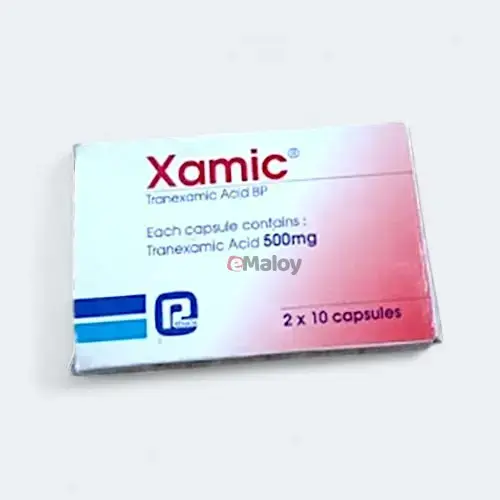
Xamic (Tranexamic Acid): A Potent Anti-fibrinolytic and Haemostatic Drug
Xamic is a preparation of Tranexamic Acid, a substance with a strong anti-fibrinolytic action. It is indicated for the prophylaxis and therapy of various hemorrhagic conditions in medicine and surgery, including hemoptysis, digestive hemorrhages, and excessive bleeding during surgical procedures. It is also used in obstetrics, urology, otorhinolaryngology, stomatology, and as supportive therapy in oncology. It belongs to the therapeutic class of Anti-fibrinolytic and Haemostatic drugs.
How Xamic Works (Pharmacology)
Tranexamic acid's primary mechanism is to inhibit the breakdown of blood clots:
- Inhibits Plasminogen Activation: It works by inhibiting the activation of plasminogen to plasmin. Plasmin is an enzyme that dissolves blood clots (fibrinolysis).
- Anti-fibrinolytic Action: By preventing the formation of plasmin, it stabilizes blood clots, thereby ensuring an antihemorrhagic effect. It is effective against both exogenous and endogenous activators of plasminogen.
- Low Toxicity and Long-Lasting Effect: The drug has extremely low toxicity and is absorbed well orally. It is excreted mainly by the kidneys, but more slowly than conventional hemostatics, which gives it a more lasting effect.
- Does Not Interfere with Clotting: At therapeutic doses, tranexamic acid does not interfere with the natural clotting process, and prolonged administration has not been shown to cause a tendency towards thrombophilia (increased risk of thrombosis).
Key Indications & Benefits
Xamic is indicated for the prophylaxis and therapy of hemorrhages in:
- Medicine: Hemoptysis, digestive hemorrhages, hemorrhagic syndromes in leukemia, cirrhosis, hemophilia, etc.
- Surgery: During and after various types of operations, including pulmonary, cardiovascular, abdominal, and in post-operative and traumatic shock.
- Urology: In prostatic, vesical, and renal surgery and for hematuria.
- Obstetrics: For post-partum hemorrhages, menometrorrhagias, and other gynecological bleeding issues.
- ENT (Otorhinolaryngology): During tonsillectomy, other specialist surgeries, and for epistaxis (nosebleeds).
- Dentistry (Stomatology): During maxillofacial operations and tooth extractions.
- Oncology: As supportive therapy to reduce bleeding during surgery, inhibit tumor growth by promoting a fibrin capsule, and cause regression of ascites.
Dosage & Administration
Dosage varies for adults and children, and is adjusted for prophylaxis or active bleeding. It can be administered orally, or by intravenous or intramuscular injection. Always consult a registered physician for specific dosage instructions.
- Adults (Usual dose): 500-1000 mg three times daily.
- Prophylaxis (Adults): 0.5-1 gm orally daily, or 500 mg parenterally.
- Hemorrhagic therapy (Adults): 1-3 gm orally in divided doses. In urgent cases, an initial 500 mg IV injection is given slowly, followed by oral doses.
- Children (Prophylaxis): 5-10 mg per kg of body weight daily in divided doses.
- Children (Therapeutic): 10-20 mg per kg of body weight daily orally, or an initial IV injection of 10 mg/kg.
- Elderly patients: No dosage reduction is needed unless there is evidence of renal failure.
Important Considerations & Warnings
It is crucial to discuss your full medical history with your doctor before taking Xamic.
Contraindications:
- Hypersensitivity to the product.
- Thromboembolic disease, arterial and venous thrombosis, endocavitary hemorrhages.
- Serious kidney failure.
Side Effects:
- Generally well tolerated.
- Infrequent cases: Fatigue, conjunctival irritation, nasal blockage, itching, skin reddening.
- After oral administration: Nausea, diarrhea, gastric pyrosis.
- Rare cases: Postural hypotension.
Pregnancy & Lactation:
- Pregnancy: Tranexamic Acid should not be administered during known and presumed pregnancy because its effects on the fetus are unknown.
- Lactation: It passes into breast milk in very small amounts. An antifibrinolytic effect in the infant is unlikely.
Precautions & Warnings:
- Hyperfibrinolysis: Xamic should only be used in cases where there is hyperfibrinolysis.
- Prophylactic Use: Treatment should begin 24 hours before surgery and continue for 3-4 days after.
- Therapeutic Use: Hemorrhagic therapy should continue for at least 24 hours after manifestations have disappeared.
- Hematuria: Doses should be reduced to prevent the formation of clots in the urinary tract.
- Renal Insufficiency: It is contraindicated in serious renal insufficiency and should be used with caution in less serious cases.
- Cardiopathic and Hepatopathic Subjects: Administration requires particular care in these patients.
Drug Interactions:
- Penicillins: Xamic is incompatible with solutions containing penicillins.
- Thrombolytic drugs (e.g., Streptokinase, Urokinase): These drugs antagonize Xamic's anti-fibrinolytic action.
- Estrogen-containing drugs (e.g., Oral Contraceptives): Concomitant administration may increase the potential for thrombus formation.
- Whole blood: Direct admixture with whole blood should be avoided during transfusion.
Storage Conditions
Store in a dry place at 15-30°C, away from light and keep out of children's reach.




Comment