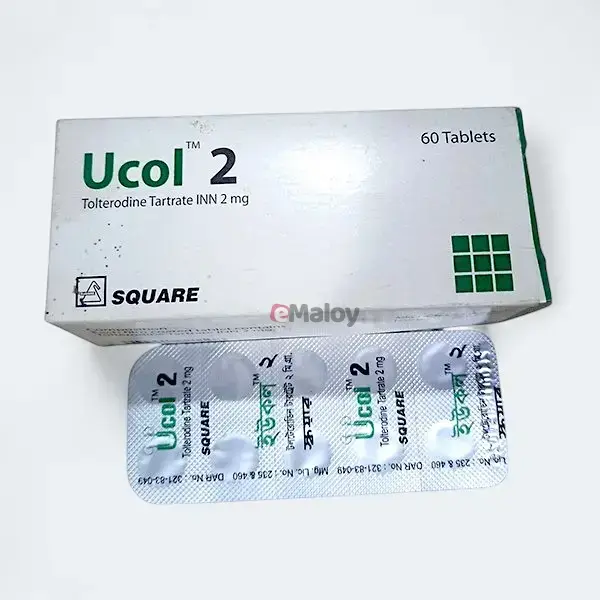
Ucol (Tolterodine): A Muscarinic Receptor Antagonist for Overactive Bladder
Ucol contains Tolterodine Tartrate, a competitive and specific muscarinic receptor antagonist. It is indicated for the treatment of an overactive bladder, which is characterized by symptoms of urge urinary incontinence, urinary urgency, and increased frequency. It works by blocking receptors that control bladder contractions. Ucol belongs to the therapeutic class of BPH/Urinary retention/Urinary incontinence drugs.
How Ucol Works (Pharmacology)
Tolterodine's mechanism of action is to block muscarinic receptors in the bladder:
- Muscarinic Receptor Antagonist: Tolterodine is a competitive antagonist of muscarinic receptors. These receptors play a role in bladder muscle contraction.
- Selectivity for Bladder: It shows a selectivity for the urinary bladder over salivary glands, which helps to reduce bladder symptoms while minimizing side effects like dry mouth.
- Reduces Bladder Contractions: By blocking these receptors, it reduces involuntary bladder contractions, thereby helping to control urinary urgency and frequency and reduce episodes of incontinence.
- Active Metabolite: Tolterodine has a major active metabolite that also contributes significantly to its therapeutic effect.
Key Indications & Benefits
Ucol is indicated for the treatment of an overactive bladder with symptoms of:
- Urge urinary incontinence
- Urgency
- Frequency
Dosage & Administration
The dosage of Ucol varies based on the formulation and the patient's individual response, tolerability, and other health conditions. The effect of treatment can be seen within 4 weeks. Always consult a registered physician for specific dosage instructions.
- Extended-release capsule:
- Recommended dose: 4 mg once daily.
- May be lowered to 2 mg once daily based on individual response.
- For patients with reduced hepatic/renal function or on strong CYP3A4 inhibitors, the recommended dose is 2 mg daily.
- Film-coated tablet:
- Recommended dose: 2 mg twice daily.
- For patients with impaired liver function or severely impaired renal function, the recommended dose is 1 mg twice daily.
Important Considerations & Warnings
It is crucial to discuss your full medical history with your doctor before taking Ucol.
Contraindications:
- Urinary retention or gastric retention.
- Uncontrolled narrow-angle glaucoma.
- Hypersensitivity to Tolterodine.
Side Effects:
- Most common: Dry mouth (most frequent), headache, constipation, and abdominal pain.
- Expected antimuscarinic side effects: Dry mouth, constipation, blurred vision (accommodation abnormalities), urinary retention, and dry eyes.
Pregnancy & Lactation:
- Pregnancy: There are no studies of Tolterodine in pregnant women. It should be used during pregnancy only if the potential benefit outweighs the potential risk.
- Lactation: It is unknown if Tolterodine is excreted in human milk. A decision should be made whether to discontinue nursing or the medication.
Precautions & Warnings:
- Bladder Outflow Obstruction: Use with caution in patients with clinically significant bladder outflow obstruction due to the risk of urinary retention.
- Gastrointestinal Disorders: Use with caution in patients with gastrointestinal obstructive disorders, such as pyloric stenosis, due to the risk of gastric retention.
- Narrow-angle Glaucoma: Use with caution in patients being treated for narrow-angle glaucoma.
- Hepatic/Renal Impairment: Patients with significantly reduced hepatic or renal function should be given a lower dose (2 mg daily).
- QT Prolongation: Caution is advised when prescribing Ucol to patients with a history of QT prolongation or those taking certain antiarrhythmic medications (Class IA or Class III).
- Driving: Patients should be informed that Ucol may cause blurred vision, dizziness, or drowsiness, which could affect their ability to drive or operate machinery.
Drug Interactions:
- CYP3A4 inhibitors (e.g., Ketoconazole, Itraconazole, Erythromycin, Clarithromycin, Cyclosporine): These drugs can significantly increase Tolterodine plasma concentrations. The dose of Ucol should be reduced to 2 mg daily for patients taking these inhibitors.
Overdose Effects
- Overdose may result in severe anticholinergic effects.
- Treatment is symptomatic and supportive, and ECG monitoring is recommended.
Storage Conditions
Store in a cool and dry place. Protect from light. Keep out of the reach of children.




Comment