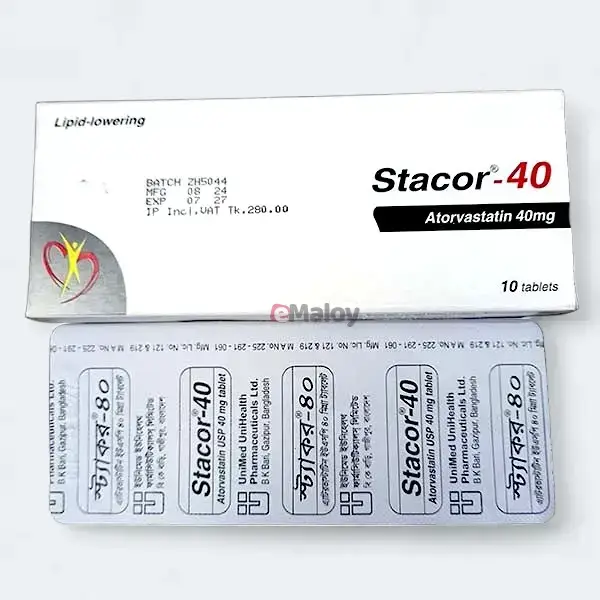
Stacor (Atorvastatin): A Statin for Lipid and Cardiovascular Risk Management
Stacor contains Atorvastatin, a selective inhibitor of HMG-CoA reductase. It is a statin indicated as an adjunct to diet to reduce elevated total cholesterol, LDL-C, Apo-B, and triglycerides in various hyperlipidemia conditions. It also helps to reduce cardiac ischemic events in patients with coronary artery disease. It belongs to the therapeutic class of Statins.
How Stacor Works (Pharmacology)
Atorvastatin's mechanism of action is focused on inhibiting the body's cholesterol production:
- Inhibits HMG-CoA Reductase: Atorvastatin blocks HMG-CoA reductase, the rate-limiting enzyme in the liver responsible for the conversion of HMG-CoA to mevalonate, a precursor of cholesterol.
- Lowers Plasma Cholesterol: By inhibiting cholesterol synthesis in the liver, Atorvastatin lowers plasma cholesterol and lipoprotein levels.
- Increases LDL Receptor Uptake: It increases the number of hepatic LDL receptors on the cell surface, which enhances the uptake and breakdown of LDL ("bad cholesterol").
- Active Metabolites: Atorvastatin is extensively metabolized in the liver to active metabolites that contribute to its inhibitory activity. The half-life of its inhibitory activity is 20-30 hours, which is longer than the drug's plasma half-life of 14 hours.
Key Indications & Benefits
Stacor is indicated as an adjunct to diet for:
- Primary hypercholesterolemia and combined hyperlipidemia: To reduce elevated total cholesterol, LDL-C, Apo-B, and triglycerides.
- Heterozygous and homozygous familial hypercholesterolemia: To reduce total and LDL-C.
- Hypertriglyceridemia (Fredrickson Type IV): To treat patients with elevated serum triglycerides.
- Dysbetalipoproteinemia (Fredrickson Type III).
- Reduction of cardiac ischemic events in patients with asymptomatic or mild to moderate symptomatic coronary artery disease with elevated LDL-C.
- Hypercholesterolemia associated with or exacerbated by diabetes mellitus or renal transplantation.
Dosage & Administration
Stacor dosage should be individualized and adjusted based on lipid levels. It can be administered as a single dose at any time of day, with or without food. The patient should be on a cholesterol-lowering diet before and during treatment. Always consult a registered physician for specific dosage instructions.
- Primary hypercholesterolemia and combined hyperlipidemia (Adults):
- Usually 10 mg once daily. May be increased to a maximum of 80 mg once daily at intervals of at least 4 weeks.
- Familial hypercholesterolemia (Adults):
- Initially 10 mg daily. Increased at intervals of at least 4 weeks to 40 mg once daily, then further increased to a maximum of 80 mg once daily if needed.
- Prevention of cardiovascular events (Adults):
- Initially 10 mg once daily, adjusted according to response.
- Pediatric patients (10-18 years):
- Hypercholesterolemia: Initial dose of 10 mg once daily, with a maximum of 20 mg/day. Dosage adjustments should be made at intervals of 4 weeks or more.
- Familial hypercholesterolemia: Initially 10 mg once daily, with a maximum of 80 mg once daily.
Important Considerations & Warnings
It is crucial to discuss your full medical history with your doctor before taking Stacor.
Contraindications:
- Hypersensitivity to any component of the medication.
- Active liver disease or unexplained persistent elevations of serum transaminases.
- History of a serious adverse reaction to other HMG-CoA reductase inhibitors.
- Pregnancy and lactation.
Side Effects:
- Generally well-tolerated.
- Most frequent: Constipation, flatulence, dyspepsia, and abdominal pain.
- Other: Infection, headache, back pain, rash, asthenia (weakness), arthralgia (joint pain), and myalgia (muscle pain).
Pregnancy & Lactation:
- Pregnancy: Atorvastatin is contraindicated during pregnancy. Animal studies show reproductive toxicity, and maternal treatment may reduce fetal cholesterol precursor levels. Women who are pregnant or may become pregnant should not take this drug.
- Lactation: It is contraindicated in breastfeeding women due to the potential for serious adverse reactions in the infant.
Precautions & Warnings:
- Liver Effects: Liver function tests should be performed before and periodically during treatment. Use with caution in patients who consume substantial quantities of alcohol or have a history of liver disease.
- Myopathy: The risk of myopathy (muscle disease) is increased with concurrent administration of cyclosporine, fibrates, niacin, erythromycin, and azole antifungals. Discontinue Stacor if markedly elevated creatine phosphokinase (CPK) levels occur or myopathy is diagnosed or suspected.
Drug Interactions:
- Cyclosporine, fibric acid derivatives, niacin, erythromycin, azole antifungals: Increase the risk of myopathy.
- Antacids/Colestipol: May decrease atorvastatin plasma concentrations, but LDL-C reduction is not significantly altered or may even be enhanced (with colestipol).
- Digoxin: Atorvastatin can increase steady-state plasma digoxin concentrations; patients should be monitored.
- Erythromycin (and other CYP450 3A4 inhibitors): Increase atorvastatin plasma concentrations.
- Oral Contraceptives: Atorvastatin can increase the plasma levels of oral contraceptive components; this should be considered when selecting an oral contraceptive.
- Warfarin: Stacor has no clinically significant effect on prothrombin time.
Use in Special Populations:
- Geriatric: Plasma concentrations of atorvastatin are higher in healthy elderly subjects, and they may show a greater degree of LDL-lowering.
- Hepatic Insufficiency: Plasma concentrations are markedly increased in patients with chronic alcoholic liver disease.
- Renal Insufficiency: No dose adjustment is necessary as renal disease does not influence plasma concentrations. Hemodialysis is not expected to be effective in clearing the drug.
Overdose Effects
- Specific treatment is not available for atorvastatin overdose.
- Treatment: The patient should be treated symptomatically with supportive measures. Liver function tests and serum CK levels should be monitored.
- Hemodialysis: Not expected to significantly enhance clearance due to extensive protein binding.
Storage Conditions
Keep in a dry place away from light and heat. Keep out of the reach of children.



Comment