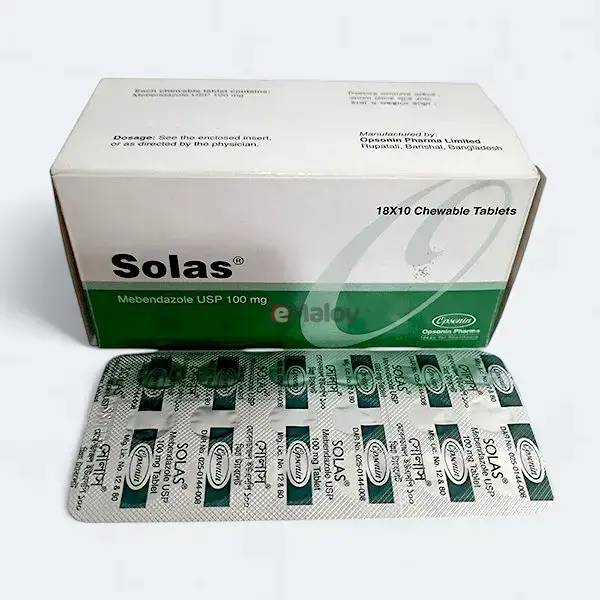
Solas (Mebendazole): A Broad-Spectrum Anthelmintic
Solas contains Mebendazole, a synthetic broad-spectrum anthelmintic medication. It is used to treat infections caused by various intestinal worms, including threadworms, whipworms, roundworms, and hookworms. It belongs to the therapeutic class of Anthelmintics.
How Solas Works (Pharmacology)
Mebendazole's primary mechanism of action is to interfere with the cellular structure and energy metabolism of the worms:
- Inhibits Microtubule Formation: Mebendazole inhibits the formation of the worms' microtubules, which are essential for many cellular processes, including glucose uptake.
- Causes Glucose Depletion: By disrupting these microtubules, Mebendazole causes the worms to deplete their glucose reserves. This leads to the immobilization and eventual death of the worms, which are then expelled from the body.
- Pharmacokinetics: After oral administration, only a small amount (2-10%) is absorbed from the gastrointestinal tract. It is highly bound to plasma proteins, and its elimination half-life is 2.8 to 9 hours.
Key Indications & Benefits
Solas is indicated for the treatment of infections caused by:
- Threadworms (also known as pinworms).
- Whipworms.
- Roundworms.
- Hookworms.
Dosage & Administration
Dosage varies depending on the type of worm infection. The drug should not be used in children under two years without considering the benefit/risk ratio. Always consult a registered physician for specific dosage instructions.
- Adults and Children over 2 years:
- Threadworms: A single dose of 100 mg (1 teaspoonful).
- Whipworms, Roundworms, Hookworms:100 mg (1 teaspoonful), twice daily for 3 days.
- Re-infection: If re-infection occurs, a second course of treatment may be needed after 2 weeks.
- Cleanliness: Patients should be informed that good hygiene and cleanliness are important to prevent re-infection and transmission.
Important Considerations & Warnings
It is crucial to discuss your full medical history with your doctor before taking Solas.
Contraindications:
- Patients with known hypersensitivity to Mebendazole or any component of the formulation.
Side Effects:
- Gastrointestinal: Transient abdominal pain and diarrhea may occur, especially in cases of massive infection and worm expulsion.
- Hypersensitivity: Rare cases of rash, urticaria (hives), and angioedema (swelling) have been reported.
- Central Nervous System: Very rare cases of convulsions.
- Hematologic: Neutropenia and agranulocytosis (low white blood cell counts) have been reported.
Pregnancy & Lactation:
- Pregnancy: Mebendazole is not recommended in pregnant women, especially during the first trimester, due to a potential risk to the fetus. Patients should be informed of this risk.
- Lactation: It is not known whether Mebendazole is excreted in human milk. Caution should be exercised when administering it to a nursing mother.
Precautions & Warnings:
- Prolonged Therapy: For prolonged therapy, periodic monitoring of organ system functions, including hematopoietic (blood) and hepatic (liver) function, is advisable.
- Children under two years: The drug has not been extensively studied in this age group, so the relative benefit and risk should be carefully considered.
Drug Interactions:
- Cimetidine: Preliminary evidence suggests that cimetidine may inhibit Mebendazole's metabolism, potentially increasing its plasma concentration.
Overdose Effects
- Symptoms: Accidental overdosage may lead to gastrointestinal complaints lasting for a few hours.
- Treatment: Inducing vomiting and purging should be considered to remove the unabsorbed drug.
Storage Conditions
Store in a cool place (below 25°C) and a dry place, protected from light. Keep out of the reach of children.




Comment