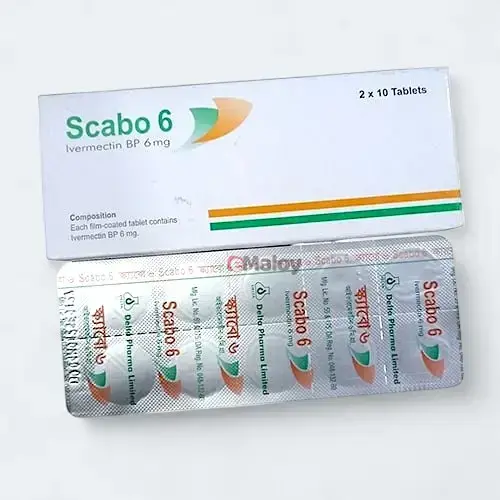
Scabo 6
Presentation:
- Each tablet contains Ivermectin BP 6 mg.
- Available in strips of [mention typical strip size, e.g., 1 or 4 tablets].
Indications:
- Treatment of scabies.
- Treatment of strongyloidiasis (threadworm infection).
- Treatment of onchocerciasis (river blindness).
- Treatment of lymphatic filariasis caused by Wuchereria bancrofti.
- Treatment of ascariasis (roundworm infection).
- Treatment of trichuriasis (whipworm infection).
- Treatment of hookworm infections.
Dosage and Administration:
- Dosage depends on the condition being treated and the patient's body weight. Always follow your doctor's instructions carefully.
- Scabies: A single oral dose of 200 micrograms (mcg) per kilogram (kg) of body weight. A second dose may be given 1-2 weeks later.
- Strongyloidiasis: A single oral dose of 200 mcg/kg body weight. For disseminated strongyloidiasis, daily doses may be needed for 1-2 days.
- Onchocerciasis: A single oral dose of 150 mcg/kg body weight every 6 to 12 months.
- Lymphatic Filariasis: A single oral dose of 200 mcg/kg body weight in combination with diethylcarbamazine (DEC).
- Ascariasis, Trichuriasis, Hookworm Infections: A single oral dose of 200 mcg/kg body weight.
- Scabo 6 tablets should be swallowed whole with water and can be taken with or without food.
Pharmacology:
- Ivermectin is a broad-spectrum antiparasitic agent. It belongs to the avermectin family of drugs. Ivermectin works by binding selectively and with high affinity to glutamate-gated chloride ion channels which occur in invertebrate nerve and muscle cells. This binding leads to an increase in the permeability of the cell membrane to chloride ions with hyperpolarization of the nerve or muscle cell, resulting in paralysis and death of the parasite. Ivermectin does not readily cross the blood-brain barrier in humans.
Side Effects:
- Side effects are usually mild and transient. They may include:
- Pruritus (itching)
- Rash
- Fever
- Dizziness
- Headache
- Nausea
- Diarrhea
- Abdominal pain
- Muscle or joint pain (in onchocerciasis patients, these may be more pronounced and related to the death of microfilariae)
Precautions:
- Use with caution in patients with liver problems.
- The safety and efficacy in children weighing less than 15 kg have not been established.
- Ivermectin should not be used in patients with known hypersensitivity to the drug or any of its components.
- Drug interactions can occur. Inform your doctor about all the medications you are taking.
Pregnancy & Lactation:
- Pregnancy Category C. Ivermectin should be used during pregnancy only if the potential benefit outweighs the potential risk to the fetus.
- Ivermectin is excreted in human milk in low concentrations. Caution should be exercised when administering ivermectin to a nursing woman.
Storage:
- Store below 30°C, protected from light and moisture.
- Keep out of the reach of children.
Therapeutic Class:
- Anthelmintics.
- Antiparasitics.
Important Note: This information is for general knowledge and informational purposes only and does not substitute professional medical advice. Always consult your doctor or pharmacist for specific instructions and guidance regarding your medication. They can assess your individual medical condition and provide the most appropriate advice.



Comment