Precodil (Prednisolone): A Glucocorticoid
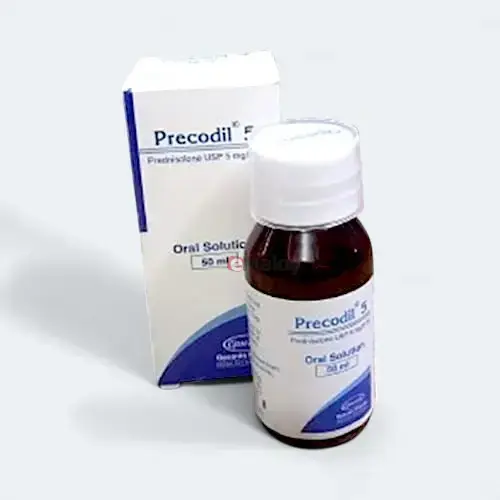
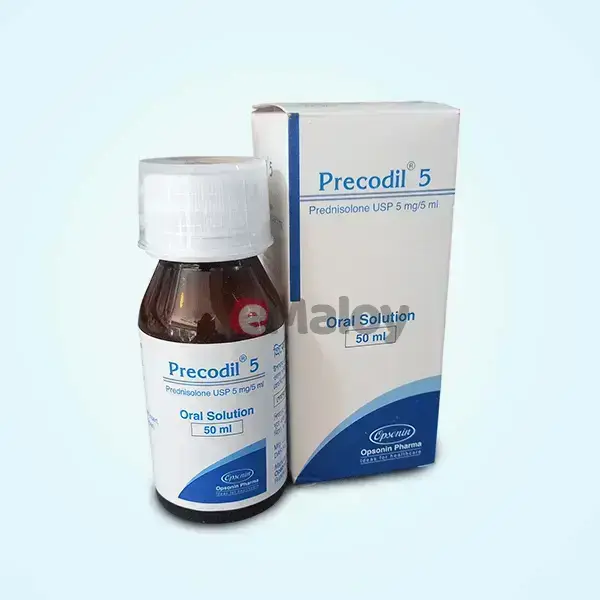
Precodil contains Prednisolone, a synthetic adrenocortical drug with predominantly glucocorticoid properties. It is used to treat a wide range of inflammatory, allergic, rheumatic, endocrine, and other disorders where suppression of the immune response or inflammation is beneficial. It belongs to the therapeutic class of Glucocorticoids.
How Precodil Works (Pharmacology)
Prednisolone exerts its effects primarily by:
- Inhibiting Phospholipase A2: It directly inhibits the action of the Phospholipase A2 enzyme. This enzyme is crucial for the production of various inflammatory mediators, including Leukotrienes, SRS-A (Slow-Reacting Substance of Anaphylaxis), and Prostaglandins. By inhibiting this enzyme, Prednisolone reduces the inflammatory response.
- Immunosuppression: Prednisolone also has broad immunosuppressive effects, reducing the activity of the immune system.
- Absorption and Metabolism: Prednisolone is rapidly and well absorbed from the gastrointestinal (GI) tract following oral administration. It is 70-90% protein-bound in the plasma, has a plasma half-life of 2 to 4 hours, is mainly metabolized in the liver, and excreted in the urine.
Key Indications & Benefits
Precodil is indicated for a wide array of conditions, including:
- Rheumatic Disorders: Psoriatic arthritis, rheumatoid arthritis, juvenile rheumatoid arthritis, ankylosing spondylitis, acute and subacute bursitis, acute nonspecific tenosynovitis, acute gouty arthritis, post-traumatic osteoarthritis.
- Endocrine Disorders: Primary or secondary adrenocortical insufficiency, congenital adrenal hyperplasia, nonsuppurative thyroiditis, hypercalcemia associated with cancer.
- Dermatologic Diseases: Pemphigus, bullous dermatitis herpetiformis, severe erythema multiforme, exfoliative dermatitis, mycosis fungoides, severe psoriasis.
- Allergic States: Seasonal or perennial allergic rhinitis, bronchial asthma, contact dermatitis, atopic dermatitis, serum sickness, drug hypersensitivity reactions.
- Respiratory Diseases: Symptomatic sarcoidosis, berylliosis, fulminating or aspirated pneumonitis.
- Hematologic Disorders: Idiopathic thrombocytopenic purpura, secondary thrombocytopenia, acquired (autoimmune) hemolytic anemia, erythroblastopenia (RBC anemia).
- Edematous States: To induce diuresis or remission of proteinuria in nephrotic syndrome (without uremia, of idiopathic type or due to lupus erythematosus).
- Gastrointestinal Diseases: Ulcerative colitis, regional enteritis.
Dosage & Administration
The dosage of Precodil varies widely depending on the condition being treated and patient response. Always consult a registered physician for medication use.
Adult Dosing:
- Nephrotic Syndrome:
- Initial: 2 mg/kg/day (maximum 80 mg/day) in 3 to 4 divided doses until urine is protein-free for 3 consecutive days (maximum 28 days).
- Followed by: 1 to 1.5 mg/kg/dose every other day for 4 weeks.
- Maintenance: 0.5 to 1 mg/kg/dose every other day for 3 to 6 months.
- Anti-inflammatory: 5 to 60 mg per day in 1 to 4 divided doses.
- Acute Asthma: 40-60 mg/day orally in a single daily dose or divided every 12 hours for 3-10 days.
- Allergic Conditions (Tapering Schedule - example):
- Day 1: 10 mg before breakfast, 5 mg after lunch, 5 mg after dinner, and 10 mg at bedtime.
- Day 2: 5 mg before breakfast, 5 mg after lunch, 5 mg after dinner, and 10 mg at bedtime.
- Day 3: 5 mg before breakfast, 5 mg after lunch, 5 mg after dinner, and 5 mg at bedtime.
- Day 4: 5 mg before breakfast, 5 mg after lunch, and 5 mg at bedtime.
- Day 5: 5 mg before breakfast and 5 mg at bedtime.
- Day 6: 5 mg before breakfast.
Pediatric Dosing:
- Asthma (Acute):
- 1 year: 10 mg orally every 12 hours.
- 1 to 4 years: 20 mg orally every 12 hours.
- 5 to 12 years: 30 mg orally every 12 hours.
12 years: 40 mg orally every 12 hours.
- Asthma (Maintenance): (Every other day)
- 1 year: 10 mg orally.
- 1 to 4 years: 20 mg orally.
- 5 to 12 years: 30 mg orally.
12 years: 40 mg orally.
- Anti-inflammatory: 0.05 to 2 mg/kg/day divided 1 to 4 times/day.
- Immunosuppression: 0.05 to 2 mg/kg/day divided 1 to 4 times/day.
Important Considerations & Warnings
It is crucial to discuss your full medical history with your doctor before taking Precodil.
Contraindications:
- Systemic infections unless specific anti-infective therapy is employed.
- Hypersensitivity to any ingredient.
- Ocular herpes simplex due to possible perforation.
Side Effects:
Glucocorticoids can cause a wide range of side effects, including:
- Fluid and Electrolyte Disturbances: Sodium retention, fluid retention, congestive heart failure (in susceptible patients), potassium loss, hypokalemic alkalosis, hypertension.
- Musculoskeletal: Muscle weakness, steroid myopathy, loss of muscle mass, osteoporosis, vertebral compression fractures, aseptic necrosis of femoral and humeral heads, pathologic fracture of long bones.
- Gastrointestinal: Peptic ulcer with possible perforation and hemorrhage, pancreatitis, abdominal distension, ulcerative esophagitis.
- Dermatologic: Impaired wound healing, thin fragile skin, petechiae and ecchymoses, facial erythema, increased sweating, may suppress reactions to skin tests.
- Neurological: Convulsions, increased intracranial pressure with papilledema (cerebral pseudotumor) (usually after treatment), vertigo, headache.
- Endocrine: Menstrual irregularities, development of Cushingoid state (Cushing's syndrome-like symptoms), suppression of growth in children, secondary adrenocortical and pituitary unresponsiveness (particularly in times of stress like trauma, surgery, or illness), decreased carbohydrate tolerance, manifestations of latent diabetes mellitus, increased requirements for insulin or oral hypoglycemic agents in diabetics.
- Ophthalmic: Posterior subcapsular cataracts, increased intraocular pressure, glaucoma, exophthalmos.
- Metabolic: Negative nitrogen balance due to protein catabolism.
Pregnancy & Lactation:
- Pregnancy: Not recommended for use during pregnancy unless considered essential by your doctor. Should only be used if the expected benefit to the mother outweighs any possible risk to the fetus.
- Lactation: Corticosteroids appear in breast milk and could suppress growth, interfere with endogenous corticosteroid production, or cause other unwanted effects in the infant.
Precautions & Warnings:
- Immunosuppression and Infection Risk:
- Patients on immunosuppressant doses should avoid exposure to chickenpox or measles. If exposed, seek medical advice without delay.
- Corticosteroids may mask some signs of infection, and new infections may appear. There may be decreased resistance and inability to localize infection.
- Children on immunosuppressive drugs are more susceptible to infections. Chickenpox and measles can be more serious or fatal in non-immune children/adults on corticosteroids.
- Vaccination: Patients on corticosteroid therapy should not be vaccinated against smallpox. Other immunization procedures should generally not be undertaken, especially with high doses, due to possible neurological complications and lack of antibody response.
- Stress: In patients on corticosteroid therapy subjected to unusual stress (trauma, surgery, illness), an increased dosage of rapidly acting corticosteroids before, during, and after the stressful situation is indicated.
- Ophthalmic Effects: Prolonged use may produce posterior subcapsular cataracts, glaucoma with possible optic nerve damage, and enhance secondary ocular infections (fungi, viruses).
- Fluid/Electrolyte Balance: Large doses can cause elevated blood pressure, salt and water retention, and increased potassium excretion.
- Growth and Development (Pediatric): Growth and development in pediatric patients on prolonged corticosteroid therapy should be carefully observed.
- Diabetes Mellitus: For patients with diabetes mellitus, the sugar content of Precodil syrup must be taken into consideration.
- Driving/Operating Machinery: There is no indication of impaired ability to drive or operate machinery.
Drug Interactions:
- Reduced Efficacy of Precodil: The efficacy of Precodil is reduced by: Aminoglutethimide, Antacids, Barbiturates, Carbamazepine, Griseofulvin, Mitotane, Phenylbutazone, Phenytoin, Primidone, and Rifampin.
- Hypokalemia Risk: Precodil reduces blood potassium levels. Digitalis can cause cardiac arrhythmias if hypokalemia occurs.
- Immunization: Should be done very carefully.
Use in Special Populations
- Pediatric Use:
- In primary and secondary adrenocortical insufficiency in infancy, mineralocorticoid supplementation is particularly important.
- Infants born to mothers who received substantial doses during pregnancy should be carefully observed for hypoadrenalism.
- Immunization procedures should not be undertaken in patients on corticosteroids.
- Growth and development should be carefully observed during prolonged therapy.
- Elderly: (Not specifically mentioned as a special population but included in adult dosing).
Overdose Effects
- Adverse effects related to prednisone normally develop only after prolonged use of doses in excess of the normal physiological requirement.
- Treatment is symptomatic. Where possible, the prednisone dose should be reduced gradually.
Storage Conditions
Store in a cool and dry place, protected from light. Keep out of the reach of the children.



Comment