Orabis (Bisoprolol Fumarate): A Selective Beta-1 Blocker for Hypertension, Angina, and Heart Failure
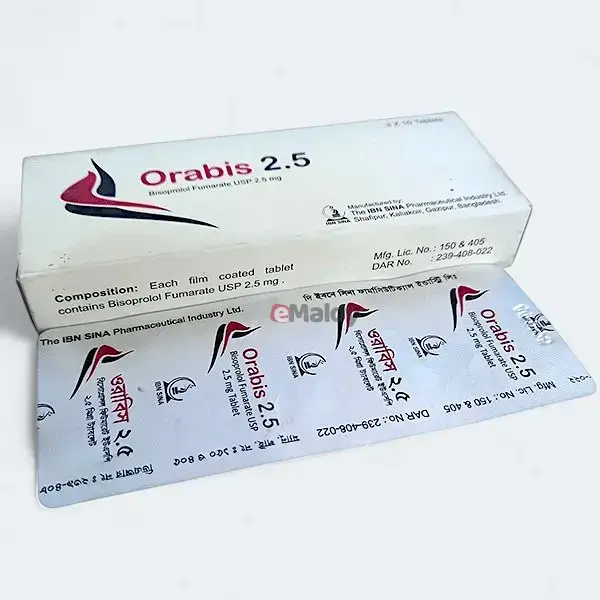
Orabis contains Bisoprolol Fumarate, which is a highly selective beta-1 blocker. It is indicated for the treatment of hypertension,angina, and moderate to severe heart failure. It is classified as an anti-adrenergic agent (Beta blockers) and Beta-adrenoceptor blocking drug. Orabis is not recommended for the emergency treatment of hypertensive crises.
How Orabis Works (Pharmacology)
Bisoprolol Fumarate primarily acts by selectively blocking beta-1 adrenergic receptors in the heart and vascular smooth muscle.
- Cardiac Effects: This blockage leads to a reduction in heart rate and cardiac output, which in turn results in a decrease in arterial hypertension.
- Selectivity: Bisoprolol is noted for its high selectivity for beta-1 receptors, meaning it has less effect on beta-2 receptors found in the lungs and other tissues, potentially reducing side effects like bronchospasm.
- Lipid Metabolism: Unlike some non-selective beta-blockers, Bisoprolol does not adversely affect cholesterol fractions, including cardioprotective HDL-cholesterol, in long-term therapy.
- Pharmacokinetics:
- Absorption: Almost completely absorbed (>90%) from the GI tract, with high bioavailability (88%) due to low first-pass effect (<10%). Food intake does not affect absorption.
- Distribution: Extensively distributed throughout the body (medium distribution volume is 3.5 L/kg).
- Metabolism: Metabolized via oxidative pathways, primarily by CYP3A4 (~95%) with a minor role for CYP2D6. Metabolites are polar and renally eliminated, lacking pharmacological activity.
- Elimination: Balanced clearance between renal elimination of unchanged drug (~50%) and hepatic metabolism (~50%), with metabolites also renally excreted. Total clearance is approximately 15 L/h.
- Half-life: Elimination half-life of 10-12 hours, supporting once-daily dosing with low inter- and intra-individual variability in plasma concentrations.
Key Indications & Benefits
Orabis is indicated for:
- Hypertension (high blood pressure)
- Angina (chest pain due to reduced blood flow to the heart)
- Moderate to severe heart failure
Dosage & Administration
Always consult a registered physician for medication use.
- Adults (for mild to moderate hypertension):
- Dosage must be individualized.
- Usual starting dose:5 mg once daily, either alone or with a diuretic.
- If response to 5 mg is inadequate, dose may be increased to 10 mg, and then, if necessary, to 20 mg once daily.
- Appropriate interval for dose titration is 2 weeks.
- Increasing the dose beyond 20 mg once daily provides minimal additional benefit.
Special Populations:
- Children: Safety and effectiveness have not been established.
- Patients with Renal or Hepatic Impairment (creatinine clearance < 40 mL/min):
- Initial daily dose should be 5 mg.
- Caution must be used in dose titration due to potential for accumulation.
- Bisoprolol fumarate is not dialyzable, so drug replacement is not necessary during dialysis.
- Geriatrics (Elderly):
- Dose adjustment is usually not necessary, unless there is significant renal or hepatic dysfunction.
Important Considerations & Warnings
It is crucial to discuss your full medical history with your doctor before taking Orabis.
Contraindications:
- Cardiogenic shock
- Overt heart failure
- Second or third-degree A-V block (a type of heart block)
- Right ventricular failure secondary to pulmonary hypertension
- Sinus bradycardia (abnormally slow heart rate)
Side Effects:
- Common: Fatigue, dizziness, headache, gastrointestinal disturbances (nausea, vomiting, diarrhea, constipation, or abdominal pain), cold or numb extremities (e.g., hands and feet), muscle weakness or cramps.
- Less common/serious: Slower than normal heart rate (bradycardia), breathing difficulties due to narrowing of airways (bronchospasm) in people with asthma or COPD.
Pregnancy & Lactation:
- Pregnancy: Bisoprolol fumarate was not teratogenic in animal studies but caused fetotoxicity (increased late resorptions) and embryolethal effects (increased early resorptions) at higher doses. There are no adequate studies in pregnant women. Use during pregnancy only if the potential benefit justifies the potential risk to the fetus.
- Lactation: Small amounts (<2% of dose) detected in milk of lactating rats. It is not known whether this drug is excreted in human milk. If use is considered essential, mothers should stop nursing.
Precautions & Warnings:
- Impaired Renal or Hepatic Function: Use caution when adjusting the dose.
- Anaphylactic Reactions: Patients with a history of severe anaphylactic reaction to allergens may be more reactive to repeated challenge while taking beta-blockers. They may also be unresponsive to usual doses of epinephrine used to treat allergic reactions.
Drug Interactions:
- Other Beta-Blocking Agents: Orabis should not be combined with other beta-blocking agents.
- Catecholamine-Depleting Drugs (e.g., reserpine or guanethidine): Monitor closely, as the added beta-adrenergic blocking action of Orabis may produce excessive reduction of sympathetic activity.
- Centrally Active Antihypertensive Agents (e.g., clonidine): Beta-blockers may exacerbate rebound hypertension following clonidine withdrawal. If co-administered, the beta-blocker should be withdrawn several days before discontinuing clonidine. If replacing clonidine with a beta-blocker, introduce the beta-blocker several days after clonidine has stopped.
- Antiarrhythmic Agents: Use with care when myocardial depressants or inhibitors of A-V conduction (e.g., certain calcium antagonists like verapamil and diltiazem, or antiarrhythmic agents like disopyramide) are used concurrently.
- Calcium Channel Blockers (especially verapamil and diltiazem classes): Combined use can lead to prolongation of S-A and A-V conduction, particularly in patients with impaired ventricular function or conduction abnormalities, potentially resulting in severe hypotension, bradycardia, and cardiac failure.
Storage Conditions
Keep in a dry place away from light and heat. Keep out of the reach of children.



Comment