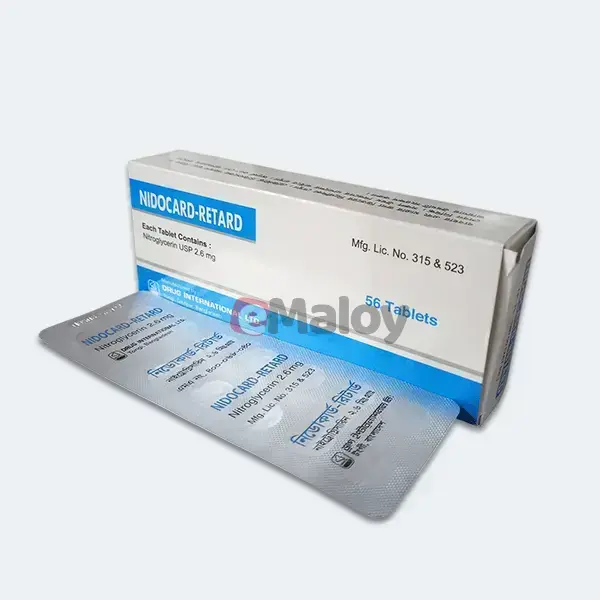
Nidocard RETARD 2.6 is a sustained-release tablet containing 2.6 mg of Glyceryl Trinitrate (Nitroglycerin). It is manufactured by Drug International Ltd.
Indications:
Nidocard RETARD 2.6 is indicated for the prophylaxis (prevention) of angina pectoris due to coronary artery disease. It is not suitable for treating an acute angina attack that has already started, as the tablets take too long to start working.
Pharmacology:
Glyceryl Trinitrate is a nitrate that works by relaxing vascular smooth muscle, causing vasodilation (widening of blood vessels) in both peripheral arteries and veins. This reduces the workload on the heart and increases blood flow, thus preventing chest pain.
Dosage and Administration:
- The usual dosage for adults is one 2.6 mg sustained-release tablet twice daily, preferably on an empty stomach (morning and evening).
- Dosage should always be adjusted according to the individual patient's needs and response, as well as the severity of the anginal pain.
- Your doctor may gradually increase the dose if necessary, up to 2 or 3 tablets twice daily.
Contraindications:
Nidocard RETARD 2.6 is contraindicated in patients with:
- Known hypersensitivity to glyceryl trinitrate, other organic nitrates, or any of the tablet's excipients.
- Early myocardial infarction (heart attack).
- Severe anemia.
- Increased intracranial pressure.
- Head trauma or cerebral hemorrhage.
- Closed-angle glaucoma.
- Patients using sildenafil citrate (Viagra) or similar phosphodiesterase type 5 (PDE5) inhibitors due to the risk of severe hypotension.
Side Effects:
Common side effects may include:
- Headache: This is common at the start of treatment but usually subsides after a few days. If it persists, the dosage may need to be reduced.
- Dizziness or lightheadedness, especially when getting up from a lying or sitting position (postural hypotension).
- Palpitation (fast or irregular heartbeat).
- Flushing of the face.
Less common side effects may include syncope (fainting), cyanosis (bluish discoloration of the skin), and methemoglobinemia (a blood disorder).
Precautions and Warnings:
- Nidocard RETARD 2.6 should be used with caution in patients who may be volume-depleted or already hypotensive.
- Excessive use may lead to the development of tolerance, meaning the drug becomes less effective over time.
- Abrupt discontinuation of long-term treatment may lead to an exacerbation of angina symptoms. When stopping treatment, the dosage should be reduced gradually over several days under medical supervision.
- Use with caution in patients predisposed to closed-angle glaucoma.
- The use of Nidocard RETARD 2.6 during the early days of acute myocardial infarction requires careful hemodynamic monitoring to avoid hypotension and tachycardia.
Drug Interactions:
Nidocard RETARD 2.6 can interact with several other medications. Tell your doctor if you are taking:
- Other vasodilators, calcium channel blockers, or beta-adrenergic blockers, as they may enhance the blood pressure-lowering effects.
- Tricyclic antidepressants and alcohol, as they may also cause hypotension.
- Phosphodiesterase type 5 (PDE5) inhibitors like sildenafil, vardenafil, and tadalafil, as this combination can cause a significant drop in blood pressure.
- Aspirin, which may decrease the clearance and enhance the hemodynamic effects of Nidocard RETARD 2.6.
- Heparin, as Nidocard RETARD 2.6 may reduce its anticoagulant effect.
- Dihydroergotamine, as nitrates may increase its bioavailability.
Pregnancy and Lactation:
Nidocard RETARD 2.6 should be given to a pregnant woman only if clearly needed and the potential benefits outweigh the risks. It is not known whether glyceryl trinitrate is excreted in human milk, so caution should be exercised in nursing mothers.
Storage:
Store in a cool and dry place, away from light and heat. Keep all medicines out of the reach of children.
Note: This information is for general knowledge and informational purposes only and does not substitute professional medical advice. Always consult your doctor or pharmacist for specific instructions and guidance regarding your medication.
Comment