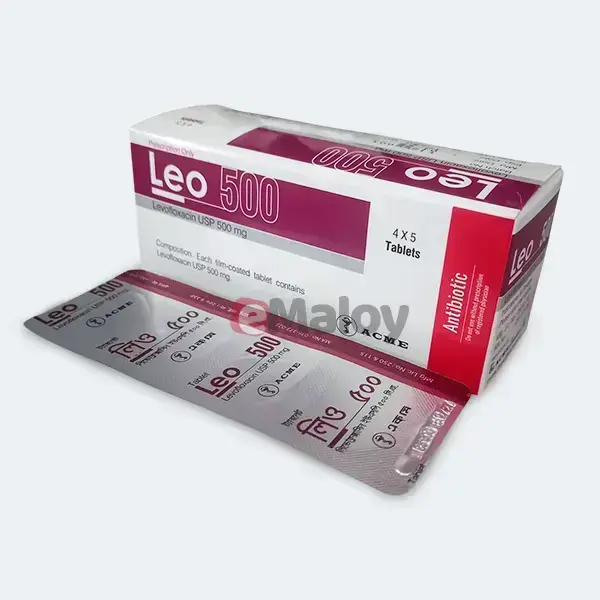
Leo 500 is a film-coated tablet containing Levofloxacin Hemihydrate 500 mg (equivalent to 500 mg Levofloxacin).
It is manufactured by The ACME Laboratories Ltd. in Bangladesh.
Indications:
Leo 500 is a synthetic, broad-spectrum, third-generation fluoroquinolone antibiotic. It is used to treat a wide range of mild, moderate, and severe bacterial infections caused by susceptible microorganisms. Its indications include:
- Acute Maxillary Sinusitis: Infections of the sinuses.
- Acute Bacterial Exacerbation of Chronic Bronchitis: Worsening of chronic lung inflammation.
- Community-Acquired Pneumonia: Lung infection acquired outside of a hospital.
- Uncomplicated and Complicated Urinary Tract Infections (UTIs): Including cystitis and pyelonephritis (kidney infection).
- Uncomplicated and Complicated Skin and Soft Tissue Infections: Including abscesses, cellulitis, furuncles, impetigo, pyoderma, and wound infections.
- Enteric Infections: Such as diarrhea, cholera, shigellosis, and enteritis.
- Enteric Fever (Typhoid fever).
- Inhalation Anthrax (prophylaxis and treatment).
- Plague.
- Chronic Bacterial Prostatitis.
Pharmacology:
Levofloxacin exerts its antibacterial action by inhibiting bacterial topoisomerase IV and DNA gyrase, enzymes critical for DNA replication, transcription, repair, and recombination in bacteria. This disruption prevents bacterial cells from dividing and repairing, leading to bacterial death. It has in vitro activity against a wide range of Gram-negative and Gram-positive microorganisms. Levofloxacin is well-absorbed after oral administration, and its bioavailability is not significantly affected by food.
Dosage and Administration:
Leo 500 can be administered with or without food. The usual dose is 500 mg every 24 hours. Dosage and duration vary depending on the specific infection and its severity. It is crucial to complete the full course of treatment as prescribed by the doctor, even if symptoms improve, to prevent antibiotic resistance.
Common dosages for specific infections:
- Acute Maxillary Sinusitis: 500 mg once daily for 10-14 days, or 750 mg once daily for 5 days.
- Acute Exacerbation of Chronic Bronchitis: 500 mg once daily for 7 days (uncomplicated), or 750 mg once daily for 3-5 days (complicated).
- Community-Acquired Pneumonia: 500 mg once daily for 7-14 days, or 750 mg once daily for 5 days.
- Uncomplicated Urinary Tract Infections: 250 mg once daily for 3 days.
- Complicated Urinary Tract Infections & Acute Pyelonephritis: 250 mg once daily for 7-10 days.
- Uncomplicated Skin & Soft Tissue Infections: 500 mg once daily for 7-10 days.
- Complicated Skin & Soft Tissue Infections: 750 mg once daily for 7-14 days.
- Enteric Fever: 500 mg once daily for 7-14 days.
- Diarrhea, Cholera, Shigellosis & Enteritis: Mild to moderate case: 500 mg (single dose). Moderate to severe case: 500 mg once daily for 3 days.
Side Effects:
Leo 500 is generally well-tolerated, but some side effects can occur.
Common side effects (1-10%):
- Nausea, vomiting, diarrhea, abdominal pain, flatulence
- Headache, dizziness, insomnia (trouble sleeping)
- Constipation
- Rash
Serious (but less common) side effects (Boxed Warnings by FDA for Fluoroquinolones):
- Tendon Rupture or Inflammation (Tendinitis): Can occur at any age, but risk is higher in those over 60, kidney/heart/lung transplant recipients, or those on corticosteroids.
- Peripheral Neuropathy (Nerve Damage): Can cause pain, burning, tingling, numbness, or weakness in arms, hands, legs, or feet. Damage may be permanent.
- Central Nervous System Effects: Convulsions, psychosis, increased intracranial pressure, tremors, agitation, anxiety, confusion, delirium, hallucinations, paranoia, depression, nightmares, suicidal thoughts or acts.
- Worsening of Myasthenia Gravis: Can exacerbate muscle weakness.
- QT Prolongation and Torsades de Pointes: Irregular heart rhythms, especially in those with pre-existing QT prolongation or electrolyte imbalances.
- Photosensitivity: Increased sensitivity to sunlight.
- Severe Allergic Reactions: Hives, trouble breathing or swallowing, swelling of face/lips/tongue/throat, fast heart rate, fainting.
- Liver Damage: Can be fatal. Symptoms include jaundice, dark urine, light-colored stools, fatigue, nausea, vomiting.
- Severe Diarrhea (Clostridium difficile-associated diarrhea): Watery and bloody stools with fever and stomach cramps.
Contraindications:
- Hypersensitivity to levofloxacin or other quinolone antibiotics.
- Children under 18 years of age (generally, due to potential for cartilage damage).
- History of tendinitis or tendon rupture associated with fluoroquinolone use.
- Patients with Myasthenia Gravis (may worsen muscle weakness).
Precautions and Warnings:
- CNS Disorders: Use with caution in patients with known or suspected CNS disorders (e.g., severe cerebral arteriosclerosis, epilepsy) or other risk factors for seizures.
- Photosensitivity: Avoid unnecessary exposure to strong sunlight or artificial UV light.
- Cardiac Conditions: Use with caution in patients with a history of prolonged QT interval, uncorrected electrolyte disturbances, or those taking QT-prolonging drugs.
- Diabetes Mellitus: Carefully monitor blood glucose levels, as it may alter glucose levels.
- Renal/Hepatic Impairment: Dose adjustments may be necessary. Periodically monitor renal, hepatic, and hematopoietic functions during prolonged treatment.
- Abrupt Discontinuation: Do not stop taking the medication suddenly. Complete the full course.
- Driving/Operating Machinery: May impair ability to drive or operate machinery due to dizziness or visual disturbances.
Pregnancy and Lactation:
- Pregnancy: Levofloxacin has not been shown to increase the risk of major birth defects in human studies, but animal data suggest potential risks at high doses. Avoid unless clearly necessary, and discuss with your doctor.
- Lactation: Levofloxacin is excreted in breast milk and is generally not recommended for nursing mothers due to potential risks to the infant.
Drug Interactions:
Levofloxacin has several significant drug interactions:
- QT-prolonging drugs: (e.g., Class IA and III antiarrhythmics, fluoxetine, imipramine) - Increased risk of QT prolongation.
- Antacids (containing Magnesium or Aluminum), Sucralfate, Didanosine, Dietary Supplements (containing Zinc, Calcium, Magnesium, or Iron): Can significantly reduce levofloxacin absorption. Take levofloxacin at least 2 hours before or 2 hours after these agents.
- Corticosteroids: Increased risk of severe tendon disorders.
- NSAIDs (Non-Steroidal Anti-inflammatory Drugs): May increase the risk of CNS stimulation and seizures.
- Antidiabetic agents (e.g., Insulin, Glibenclamide): May alter glucose levels; monitor blood glucose carefully.
- Warfarin: Increased prothrombin time and bleeding risk. Monitor INR closely.
Storage Conditions:
Store in a cool and dry place, protected from light. Keep all medicine out of the reach of children.
Note: This information is for general knowledge and informational purposes only and does not substitute professional medical advice. Always consult your doctor or pharmacist for specific instructions and guidance regarding your medication.



Comment