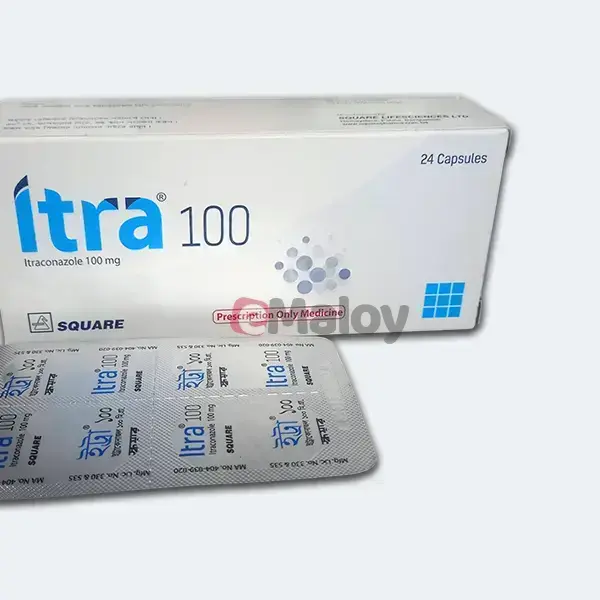
Itra 100 is a capsule containing Itraconazole 100 mg. It is manufactured by Square Pharmaceuticals PLC in Bangladesh.
Indications:
Itra 100 is an antifungal medication from the triazole class. It is used to treat a wide range of fungal and yeast infections. Its indications include:
- Oropharyngeal candidiasis (thrush in the mouth and throat)
- Vulvovaginal candidiasis (vaginal yeast infections)
- Pityriasis versicolor (a common skin fungal infection)
- Dermatophytoses: Tinea pedis (athlete's foot), Tinea cruris (jock itch), Tinea corporis (ringworm), Tinea manuum (hand fungal infection)
- Onychomycosis (fungal infection of fingernails and toenails)
- Systemic fungal infections: Aspergillosis, Candidiasis, and Cryptococcosis (including cryptococcal meningitis), especially when other antifungal drugs are inappropriate or ineffective.
- Histoplasmosis
- Maintenance therapy in AIDS patients to prevent relapse of underlying fungal infections.
- Prophylaxis of fungal infections during prolonged neutropenia (low white blood cell count).
Some formulations of Itraconazole use a SUBA (Super Bio-available) technology to enhance the absorption of the drug.
Pharmacology:
Itraconazole works by inhibiting cytochrome P-450 dependent enzymes in fungi, which are crucial for the synthesis of ergosterol, a vital component of the fungal cell membrane. This disruption leads to impaired cell membrane function and ultimately fungal cell death. It is an orally active broad-spectrum antifungal.
Dosage and Administration:
Itra 100 should be taken immediately after a full meal to ensure optimal absorption. The duration and dosage depend on the type and severity of the infection.
- Vulvovaginal candidiasis: 200 mg twice daily for 1 day.
- Pityriasis versicolor: 200 mg once daily for 7 days.
- Tinea corporis, tinea cruris: 100 mg once daily for 15 days, or 200 mg once daily for 7 days.
- Tinea pedis, tinea manuum: 100 mg once daily for 30 days.
- Oropharyngeal candidiasis: 100 mg once daily for 15 days (increase to 200 mg once daily for 15 days in AIDS or neutropenic patients due to impaired absorption).
- Onychomycosis (toenails with or without fingernail involvement):
- Either 200 mg daily for 3 months, OR
- "Pulse" therapy: 200 mg twice daily for 7 days, followed by a 21-day interval without medication. Fingernails typically require two such courses, and toenails three courses.
- Systemic Fungal Diseases (Aspergillosis, Candidiasis, Cryptococcosis):
- Initially 200 mg once daily, increased to 200 mg twice daily for invasive or disseminated disease and cryptococcal meningitis.
- Duration: 2-5 months for Aspergillosis, 3 weeks-7 months for Candidiasis, 10 weeks for non-meningeal Cryptococcosis, 2-6 months for Cryptococcal meningitis.
- Histoplasmosis: 200 mg once daily to twice daily for 8 months.
- Maintenance in AIDS patients and Prophylaxis in neutropenia: 200 mg once daily.
Side Effects:
Common side effects include:
- Nausea, abdominal pain, dyspepsia (indigestion), constipation, diarrhea
- Headache, dizziness
- Raised liver enzymes
- Menstrual disorders
- Rash, pruritus (itching), urticaria (hives), angioedema (swelling beneath the skin)
- Peripheral neuropathy (nerve damage)
More serious but rare side effects can include:
- Hepatitis and cholestatic jaundice (liver issues)
- Congestive heart failure (CHF) or worsening of pre-existing CHF (monitor for symptoms like shortness of breath, edema, rapid weight gain)
- Hypokalemia (low potassium)
- Edema (swelling)
- Hair loss (alopecia)
- Stevens-Johnson syndrome (severe skin reaction)
- Hearing loss (may be permanent)
- Blurred or double vision
Contraindications:
Itra 100 is contraindicated in patients with:
- Known hypersensitivity to Itraconazole or any component of the formulation.
- Severe hepatic (liver) disease.
- Pregnancy (except in life-threatening situations where the benefit outweighs the risk).
- Lactation (breastfeeding is not recommended).
- Co-administration with certain drugs that are metabolized by CYP3A4 and can prolong the QT interval (e.g., astemizole, bepridil, cisapride, dofetilide, dronedarone, halofantrine, levacetylmethadol (levomethadyl), mizolastine, pimozide, quinidine, ranolazine, sertindole, terfenadine, methadone).
- Co-administration with ergot alkaloids (e.g., ergotamine, dihydroergotamine, ergometrine, methylergometrine) due to increased risk of ergotism.
- Co-administration with HMG-CoA reductase inhibitors (statins) that are metabolized by CYP3A4 (e.g., atorvastatin, lovastatin, simvastatin) due to increased risk of myopathy/rhabdomyolysis.
- For peri-operative pain in the setting of coronary artery bypass graft (CABG) surgery.
Precautions and Warnings:
- Cardiac Function: Use with caution in patients with a history of heart failure, chronic obstructive pulmonary disease (COPD), or other conditions that predispose to cardiac dysfunction. Monitor for signs of CHF.
- Liver Function: Liver function should be monitored, especially in patients with pre-existing hepatic abnormalities or those on continuous treatment for more than one month. Discontinue if signs of liver dysfunction develop.
- Gastric Acidity: Absorption is impaired when gastric acidity is reduced. If taking acid-reducing medicines (e.g., antacids, PPIs, H2 blockers), Itra 100 should be administered at least 2 hours after the acid-neutralizing medicine. Taking with a cola drink may improve absorption if gastric acidity is low.
- Pregnancy Prevention: Women of childbearing potential should use effective contraception during treatment and for two months after stopping Itraconazole.
- Driving/Operating Machinery: May cause dizziness, blurred vision, or hearing loss, which could impair the ability to drive or operate machinery.
- Renal Insufficiency: Use with caution, and dose adjustments may be needed.
- Drug Resistance: Complete the full course of treatment to minimize the risk of developing drug resistance.
Drug Interactions:
Itraconazole is a potent inhibitor of the CYP3A4 enzyme, leading to numerous significant drug interactions.
- Increased Plasma Levels/Toxicity of: Oral anticoagulants (warfarin), digoxin, cilostazol, alprazolam, midazolam (IV), repaglinide, corticosteroids (e.g., budesonide, dexamethasone), sildenafil, tadalafil, vardenafil, certain calcium channel blockers (e.g., felodipine, nisoldipine), irinotecan, lurasidone, colchicine (in patients with renal or hepatic failure), eletriptan.
- Reduced Plasma Levels of Itraconazole: By Rifampicin, Rifabutin, Isoniazid, Carbamazepine, Nevirapine, Phenytoin, Phenobarbital.
- Reduced Absorption of Itraconazole: By PPIs, antacids, antimuscarinics, H2 receptor antagonists (take Itra 100 at least 2 hours after these medications, or with a cola drink).
Storage Conditions:
Store below 25°C, in a cool and dry place, protected from light. Keep all medicine out of the reach of children.
Note: This information is for general knowledge and informational purposes only and does not substitute professional medical advice. Always consult your doctor or pharmacist for specific instructions and guidance regarding your medication.



Comment