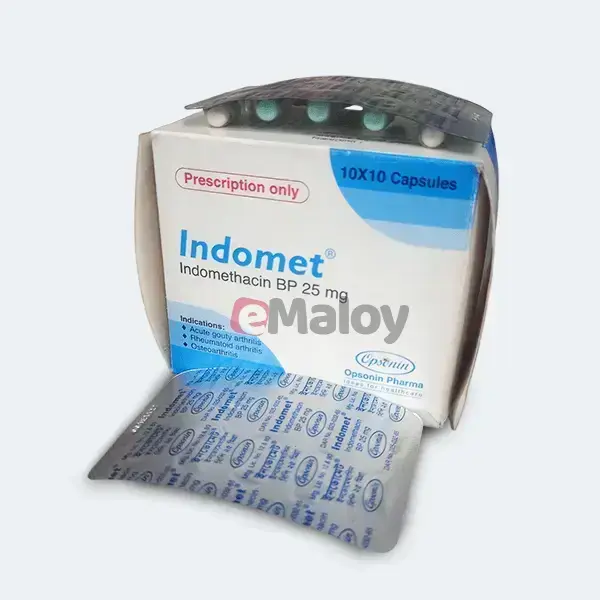
Indomet 25 is a capsule containing Indomethacin BP 25 mg. It is manufactured by Opsonin Pharma Ltd. in Bangladesh.
Indications:
Indomet 25 is a nonsteroidal anti-inflammatory drug (NSAID) used to relieve pain, inflammation, and stiffness. It is indicated for the symptomatic management of various conditions, including:
- Rheumatoid Arthritis: Including acute flares of chronic disease.
- Osteoarthritis (degenerative joint disease).
- Ankylosing Spondylitis: A type of arthritis affecting the spine.
- Acute Gouty Arthritis: Severe joint pain and inflammation due to gout.
- Acute Painful Shoulder: Such as bursitis or tendinitis.
- Moderate to severe acute pain from various causes.
- Fever (though not its primary indication at this dose).
Pharmacology:
Indomethacin is an indole acetic acid derivative. It works by inhibiting the activity of cyclooxygenase (COX) enzymes, particularly COX-1 and COX-2. This inhibition reduces the production of prostaglandins, which are chemicals in the body that cause pain, inflammation, and fever.
Dosage and Administration:
Indomet 25 is typically taken orally. It is generally recommended to take it with food or milk to reduce gastrointestinal upset. The dosage varies depending on the condition and patient response.
- For chronic musculoskeletal and joint disorders (e.g., Rheumatoid Arthritis, Osteoarthritis, Ankylosing Spondylitis):
- Initial dose: 25 mg two or three times daily.
- May be increased by 25 to 50 mg daily at weekly intervals, up to a maximum total daily dose of 200 mg.
- For acute gouty arthritis:
- A suggested initial dose is 50 mg three times daily, with rapidly reducing doses as symptoms improve. Up to 200 mg daily may be required in severe cases.
- For acute painful shoulder (bursitis or tendinitis):
- 75 to 150 mg per day, divided into three or four equal doses, usually taken for 1 to 2 weeks.
- For mild to moderate acute pain:
- 20 mg three times a day, or 40 mg two or three times a day.
- To alleviate night pain and morning stiffness, 100 mg may be administered at bedtime (as oral or rectal suppository, if available).
- Children (under 14 years): Use and dose must be determined by a doctor.
Contraindications:
Indomet 25 is contraindicated in patients with:
- Known hypersensitivity to indomethacin or other NSAIDs (including aspirin), especially if they have experienced asthma, urticaria (hives), or allergic-type reactions after taking them.
- Active peptic ulceration or a history of recurrent gastrointestinal bleeding/ulceration.
- Severe renal (kidney) failure.
- Serious liver disease or hepatic encephalopathy.
- History of proctitis or recent rectal bleeding (for suppositories).
- For peri-operative pain in the setting of coronary artery bypass graft (CABG) surgery.
- Third trimester of pregnancy due to risk of premature closure of ductus arteriosus in the fetus.
Side Effects:
Common side effects include:
- Gastrointestinal disturbances: Nausea, vomiting, diarrhea, epigastric pain, abdominal pain, indigestion, heartburn, flatulence. These are often due to large doses and may subside with dose reduction.
- Headache, dizziness, vertigo.
- Somnolence (drowsiness) or insomnia.
- Rarely, mild psychic disturbances.
More serious but less common side effects include:
- Gastrointestinal bleeding, ulceration, or perforation.
- Kidney dysfunction (e.g., fluid retention, edema, renal insufficiency).
- Increased blood pressure (hypertension).
- Cardiovascular thrombotic events (e.g., heart attack, stroke), especially with long-term use or high doses.
- Hypersensitivity reactions (e.g., skin rash, itching, bronchospasm).
- Elevated liver function tests.
- Anemia.
Precautions and Warnings:
- Gastrointestinal Risk: Serious GI events (bleeding, ulceration, perforation) can occur without warning. Patients with a history of GI disease (ulcerative colitis, Crohn's disease) should use with caution.
- Cardiovascular Risk: NSAIDs may increase the risk of serious cardiovascular thrombotic events. Use with caution in patients with heart disease or risk factors for heart disease.
- Renal/Hepatic Impairment: Use with caution; dose adjustment may be necessary. Regular monitoring of kidney and liver function is recommended for long-term treatment.
- Fluid Retention/Edema: Use with caution in patients with heart failure or hypertension due to fluid retention.
- Electrolyte Imbalance: May increase serum potassium levels (hyperkalemia).
- Aseptic Meningitis: Rarely reported, especially in patients with systemic lupus erythematosus or mixed connective tissue disorders.
- Vision/Hearing: Long-term use may cause corneal deposits and retinal disturbances. Tinnitus (ringing in the ears) or hearing difficulty may occur.
- Alcohol: Avoid consuming alcohol, as it can increase the risk of stomach problems.
Pregnancy and Lactation:
- Pregnancy: Generally not recommended during pregnancy, especially in the third trimester due to the risk of premature closure of the fetal ductus arteriosus and kidney problems in the fetus.
- Lactation: Indomethacin is excreted in breast milk. Its use is generally not recommended in nursing mothers.
Drug Interactions:
- Anticoagulants (e.g., Warfarin) and other NSAIDs (including Aspirin): Increased risk of gastrointestinal bleeding.
- Diuretics and Antihypertensives (e.g., ACE inhibitors, beta-blockers): NSAIDs may reduce their effectiveness.
- Lithium: Indomethacin can increase lithium plasma levels, leading to toxicity.
- Methotrexate: Indomethacin can increase methotrexate levels and toxicity.
- Cyclosporine: Increased risk of nephrotoxicity.
- Digoxin: May increase plasma digoxin levels.
- Probenecid: May increase indomethacin plasma levels; a dose reduction of indomethacin may be necessary.
- Potassium-sparing diuretics: Increased risk of hyperkalemia.
Storage Conditions:
Store in a cool and dry place, below 30°C, protected from light and moisture. Keep out of reach of children.
Note: This information is for general knowledge and informational purposes only and does not substitute professional medical advice. Always consult your doctor or pharmacist for specific instructions and guidance regarding your medication.



Comment