Imiclara Cream 250mg: Immunomodulator for Skin Conditions
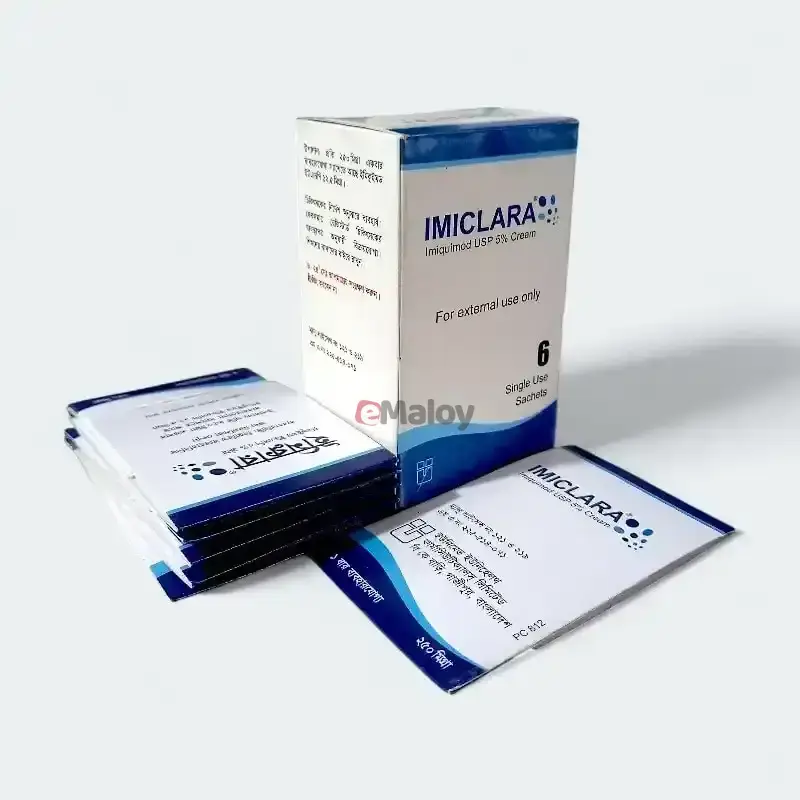
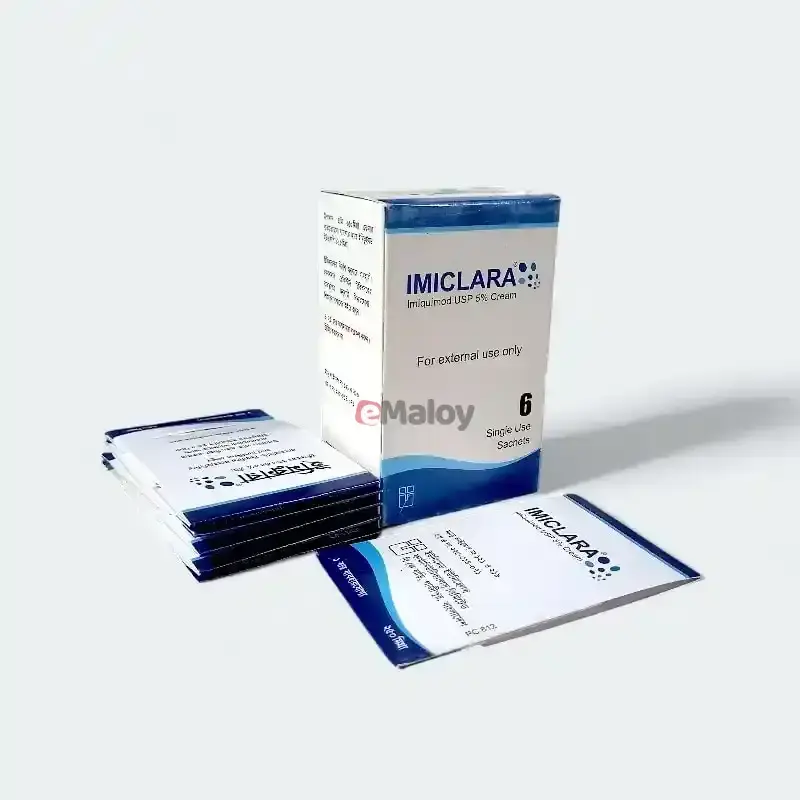
Imiclara Cream 250mg (Full Box) is a topical medication used to treat certain skin conditions by stimulating the body's immune system. It is indicated for the treatment of genital warts, actinic keratosis (rough, scaly patches due to sun exposure), and a specific type of skin cancer called superficial basal cell carcinoma.
How Imiclara Cream Works (Mode of Action)
Imiclara Cream's active ingredient,Imiquimod, is an immune response modifier and a Toll-like receptor 7 (TLR7) agonist. It works by activating immune cells, which then produce natural substances like interferon-alpha (IFN-α) and other cytokines. While the exact mechanism isn't fully understood, this immune activation helps the body fight against the virus causing warts and acts as an anti-tumor agent for actinic keratosis and basal cell carcinoma. It does not have direct antiviral activity.
Key Indications & Benefits
- External Genital Warts & Perianal Warts/Condyloma Acuminata: Helps clear these skin bumps caused by a virus.
- Actinic Keratosis: Treats rough, scaly lesions on the face or scalp that are pre-cancerous due to sun exposure.
- Superficial Basal Cell Carcinoma: Used for the topical treatment of this type of skin cancer.
Always consult a registered physician for medication use.
Dosage & Administration
Imiclara Cream is for external use only. It should be applied prior to normal sleeping hours and left on the skin for approximately 8 hours (between 6 and 10 hours), then washed off with mild soap and water. Non-occlusive dressings like cotton gauze or cotton underwear may be used for managing skin reactions.
The dosage and duration depend on the condition being treated:
- Anogenital Warts (Adult):
- As 3.75% cream: Apply thinly once daily until total clearance or for a maximum of 8 weeks.
- As 5% cream: Apply 3 times weekly (on non-consecutive days) for up to 16 weeks.
- Superficial Basal Cell Carcinoma (Adult):
- As 5% cream: Apply 5 times weekly (on consecutive days) before bedtime for 6 weeks. Response should be assessed 12 weeks after completing treatment.
- Actinic Keratoses (Adult):
- As 2.5% or 3.75% cream: Apply to face or scalp once daily before bedtime for 2 weeks. Repeat the course after a 2-week treatment-free interval. Assess response 8 weeks after the second course.
- As 5% cream: Apply 3 times weekly before bedtime for 4 weeks, repeat for a further 4 weeks with a 4-week interval if necessary; or alternatively, apply 2 times weekly for 16 weeks.
- Children: Safety and effectiveness in children under 12 years have not been established.
Always consult a registered physician for medication use.
Important Considerations & Warnings
It is crucial to discuss your full medical history with your doctor before using Imiclara Cream.
Contraindications:
- Hypersensitivity (allergy) to the active ingredient Imiquimod or any excipients in the product.
Side Effects: Common side effects are often local skin reactions at the application site and can include:
- Redness (Erythema)
- Itching
- Burning
- Dryness
- Swelling (Edema)
- Flaking/Scaling
- Scabbing/Crusting
- Erosion/Ulceration
- Pain
- Bleeding
- Stinging
- Headache
- Flu-like symptoms (e.g., fever, chills, tiredness, muscle aches)
- Nausea, vomiting, diarrhea
Precautions & Warnings:
- Autoimmune Conditions: Use with caution in patients with pre-existing autoimmune conditions.
- Reduced Hematologic Reserve: Use with caution in patients with reduced blood cell counts.
- Organ Transplant Patients: Use with caution due to the risk of organ rejection or graft-versus-host disease.
- Application Site: Not indicated for urethral, intravaginal, cervical, rectal, or intra-anal human papilloma viral disease. Avoid contact with eyes, lips, nostrils, and broken skin. If accidental contact occurs, rinse thoroughly with water.
- Occlusive Dressings: Avoid using occlusive (airtight) dressings over the treated area.
- Sun Exposure: Avoid exposure to direct sunlight, UV lights, and tanning beds during treatment. Wear protective clothing and sunscreen.
- Monitoring: Your doctor will assess for reduction in lesion size and monitor for local skin reactions and signs of hypersensitivity.
- Sexual Activity: Avoid sexual contact while the cream is on your skin, especially when treating genital or anal warts, as it may weaken condoms and diaphragms.
- Skin Healing: Do not use on open wounds or skin that has not yet healed from surgery or other medical treatment.
- Immunocompromised Patients: If you are HIV positive or have a compromised immune system, inform your doctor as the effectiveness may be reduced.
Pregnancy & Lactation:
- Pregnancy: Imiquimod should be used during pregnancy only if the potential benefit justifies the potential risk to the fetus. There are no adequate studies in pregnant women.
- Lactation: It is not known whether Imiquimod is excreted in human milk. Use with caution, and a decision should be made whether to discontinue nursing or discontinue the drug, considering the importance of the drug to the mother.
Overdose: Topical overdosage is unlikely to cause severe systemic effects. However, persistent dermal overdosing may result in severe local skin reactions. Treatment should be symptomatic and supportive.
Storage Conditions
Store as directed, typically at room temperature. Keep each packet unopened until ready to use. Dispose of any unused cream from an opened packet. Keep out of the reach of children.




Comment