Indications
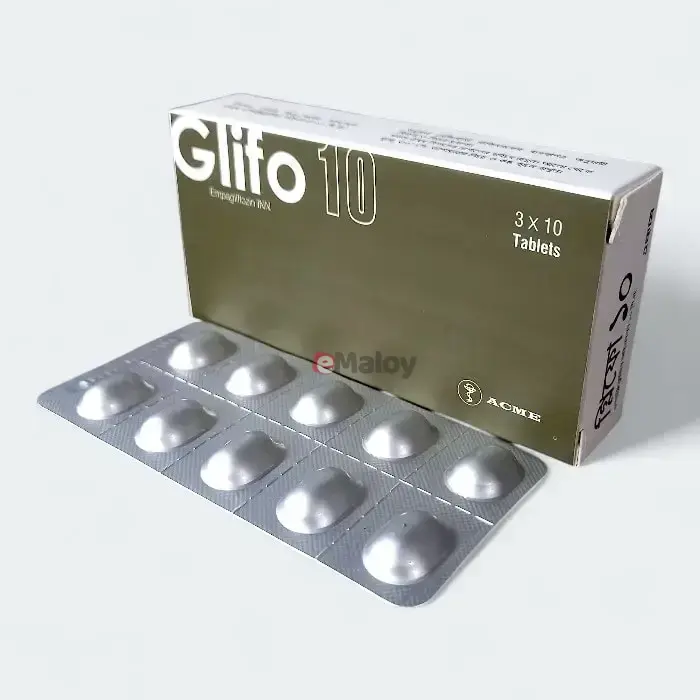
Glifo (Empagliflozin) is indicated for:
- Improving glycemic control in adults with type 2 diabetes mellitus, as an addition to diet and exercise.
- Reducing the risk of cardiovascular death in adult patients with type 2 diabetes mellitus and pre-existing cardiovascular disease.
Pharmacology
Empagliflozin is a sodium-glucose co-transporter-2 (SGLT2) inhibitor. SGLT2 is a protein in the kidneys that reabsorbs glucose from the bloodstream. By inhibiting SGLT2, Empagliflozin reduces the amount of glucose reabsorbed by the kidneys and lowers the renal threshold for glucose. This leads to increased glucose excretion in the urine, which helps to lower blood glucose levels, assists with weight loss, and reduces blood pressure.
Dosage & Administration
- The recommended starting dose is 10 mg once daily, taken in the morning, with or without food.
- If the 10 mg dose is well tolerated, it can be increased to a maximum of 25 mg once daily.
- In patients with volume depletion, this condition should be corrected before starting Glifo.
Interaction
- Diuretics: Co-administration with diuretics can lead to increased urine volume.
- Insulin/Insulin Secretagogues: Co-administration increases the risk of hypoglycemia.
- Urine Glucose Tests and 1,5-AG Assays: Glifo increases urinary glucose excretion, making these tests unreliable for monitoring glycemic control. Alternative methods should be used.
Contraindications
Glifo is contraindicated in patients with:
- A history of serious hypersensitivity reactions to Empagliflozin or any of its ingredients.
- Severe renal impairment, end-stage renal disease, or those on dialysis.
Side Effects
The most common side effects are urinary tract infections and female genital mycotic infections. Other common side effects include dehydration, hypotension, weakness, dizziness, and increased thirst.
Pregnancy & Lactation
- Pregnancy: There are no adequate studies of Empagliflozin in pregnant women. It should be used during pregnancy only if the potential benefit justifies the potential risk to the fetus.
- Lactation: It is not known if Empagliflozin is excreted in human milk, and its use is not recommended while breastfeeding.
Precautions & Warnings
- Renal Function: Renal function should be assessed before starting Glifo and periodically thereafter.
- It should not be initiated in patients with an estimated glomerular filtration rate (eGFR) of less than 45 ml/min/1.73 m2 .
- No dose adjustment is needed for patients with an eGFR greater than or equal to 45 ml/min/1.73 m2 .
Overdose Effects
In the event of an overdose, standard supportive measures should be used. The removal of Glifo by hemodialysis has not been studied.
Therapeutic Class
Glifo belongs to the therapeutic class of Sodium-glucose Cotransporter-2 (SGLT2) Inhibitors.
Storage Conditions
Keep in a cool and dry place (below 30°C), protected from light and moisture. Keep out of the reach of children.




Comment