Gastisol Max: A Combination Antacid and Alginate for Reflux and Indigestion
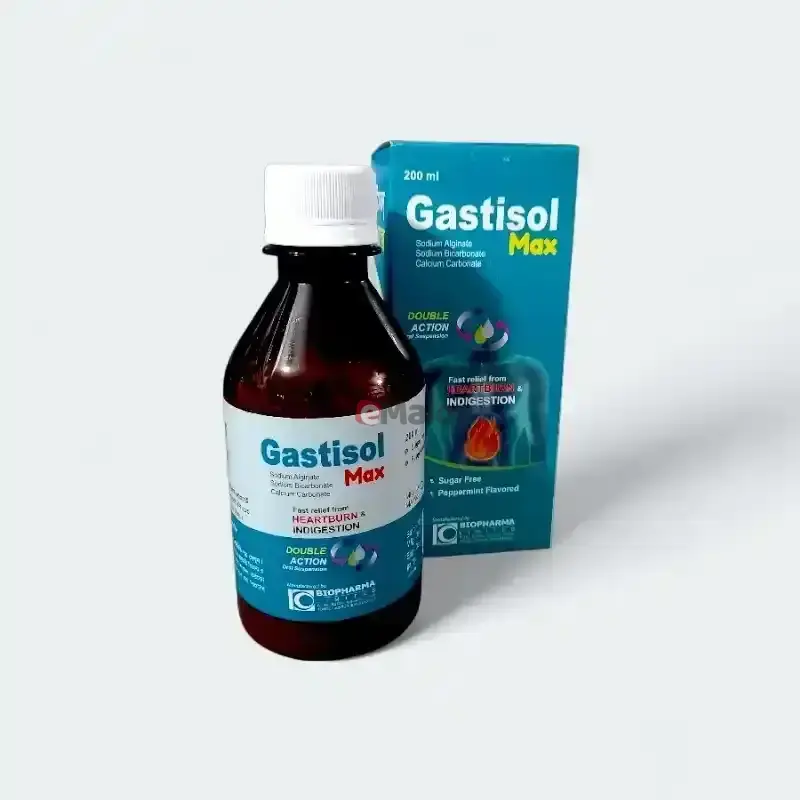
Gastisol Max is a medicinal product combining two antacids (Calcium carbonate and Sodium bicarbonate) and an alginate (Sodium alginate). It works in two ways to provide relief from gastric reflux and related symptoms: by neutralizing excess stomach acid and by forming a protective barrier over stomach contents.
How Gastisol Max Works (Pharmacology)
The action of Gastisol Max is primarily physical, not depending on systemic absorption.
- Rapid Reaction & Raft Formation: Upon ingestion, the product rapidly reacts with gastric acid to form a raft of Alginic Acid gel. This gel has a near-neutral pH.
- Acid Pocket Capping: Studies show that this alginic acid raft interacts with and caps the acid pocket in the stomach, thereby reducing esophageal acid exposure.
- Reflux Impeding & Protection: The raft floats on the stomach contents, effectively impeding gastro-esophageal reflux for up to 4 hours and protecting the esophagus from acid, pepsin, and bile.
- Demulcent Effect: In severe cases, the raft itself may be refluxed into the esophagus, providing a demulcent (soothing) effect.
- Bile and Pepsin Entrapment: In vitro evidence also suggests the raft can entrap bile and pepsin within its structure, offering further protection to the esophagus.
- Antacid Action:
- Calcium Carbonate neutralizes gastric acid, providing fast relief from indigestion and heartburn.
- Sodium Bicarbonate enhances this neutralizing effect with its own antacid action.
Key Indications & Benefits
Gastisol Max is indicated for the symptomatic treatment of:
- Gastric reflux
- Heartburn
- Indigestion
- Flatulence associated with gastric reflux
- Heartburn of pregnancy
- All cases of epigastric and retrosternal distress where the underlying cause is gastric reflux.
Dosage & Administration
Gastisol Max is available as an oral suspension and chewable tablets. Always consult a registered physician for medication use.
For Oral Suspension:
- Adults and children over 12 years: 10-20 mL after meals and at bedtime, up to four times a day.
- Children 6 to 12 years: 5-10 mL after meals and at bedtime, up to four times a day.
- Children under 6 years: Not recommended.
- Elderly: No dose modifications necessary.
For Chewable Tablet: Tablets should be thoroughly chewed before swallowing.
- Adults and children 12 years and over: Take two to four tablets after meals and at bedtime, up to four times a day.
- Children under 12 years: Tablets should be given only on medical advice.
Special Populations:
- Hepatic Impairment: No dose modification necessary.
- Renal Insufficiency: Use with caution if a highly restricted salt diet is necessary.
Important Considerations & Warnings
It is crucial to discuss your full medical history with your doctor before taking Gastisol Max.
Contraindications:
- Patients with known or suspected hypersensitivity to the active ingredients or any excipients.
Side Effects:
- Common (may occasionally occur): Constipation, flatulence, stomach cramp, or belching. Consult a physician if these occur.
- Overdose: If too large a dose is taken, a sensation of swelling may appear. In this case, consult a physician.
Pregnancy & Lactation:
- Pregnancy: Clinical studies and post-marketing data indicate no malformative, fetal, or neonatal toxicity. This drug can be used during pregnancy if clinically needed.
- Breastfeeding: No effects on breastfed newborns/infants have been shown. This drug can be used during breastfeeding.
- Fertility: Pre-clinical and clinical data do not suggest a negative effect on human fertility.
Precautions & Warnings:
- Sodium Content: Each 20 ml dose of suspension has a sodium content of 254.5 mg (11.06 mmol). Each chewable tablet contains 75 mg of calcium. This should be taken into account for patients on a highly restricted salt diet (e.g., in some cases of congestive cardiac failure and renal impairment). Gastisol Max is considered high in sodium.
- Calcium Content: Each 20 ml contains 260 mg (6.5 mmol) of calcium. Care is needed in treating patients with hypercalcaemia (high blood calcium), nephrocalcinosis (calcium deposition in kidneys), and recurrent calcium-containing renal calculi (kidney stones).
- Children: Treatment of children younger than 12 years of age is not generally recommended, except on medical advice.
- Phenylketonuria: Due to its aspartame content (if applicable for chewable tablets), Gastisol Max should not be given to patients with phenylketonuria.
- Persistent Symptoms: If symptoms persist, or treatment is required for more than 7 days continuously, medical advice should be sought.
- Masking Underlying Conditions: Taking Gastisol Max can mask the symptoms of other more serious, underlying medical conditions.
- Renal Impairment/Hypophosphatemia: Should not be used in patients with impaired renal function/insufficiency and with hypophosphatemia (low phosphate levels).
- Allergic Reactions: May cause allergic reactions.
Drug Interactions:
- A time-interval of 2 hours should be considered between Gastisol Max intake and the administration of other medicinal products, especially:
- Tetracyclines
- Digoxin
- Fluoroquinolones
- Iron salts
- Ketoconazole
- Neuroleptics
- Thyroid Hormones
- Penicillamine
- Beta-blockers (Atenolol, Metoprolol, Propranolol)
- Glucocorticoids
- Chloroquine
- Bisphosphonates (diphosphonates)
- Estramustine
- This separation is important because Gastisol Max can interfere with the absorption of these drugs.
Overdose Effects:
- In the event of overdose, symptomatic treatment should be given.
- The patient may notice abdominal distension.
Storage Conditions
Store in a cool (below 30°C) and dry place, away from light. Keep out of the reach of children. Do not refrigerate or freeze.



Comment