Indications
Fuclav is a combination antibiotic used to treat a wide range of bacterial infections. It is effective against susceptible strains that cause conditions such as:
- Upper and lower respiratory tract infections: Pharyngitis, tonsillitis, sinusitis, pneumonia, and bronchitis.
- Skin and soft tissue infections.
- Urinary tract infections.
- Bone and joint infections.
- Uncomplicated gonorrhea.
- Early Lyme disease.
- Severe systemic infections: Septicemia and meningitis. It is also used as a "switch therapy," transitioning from an intravenous to an oral antibiotic.
Pharmacology
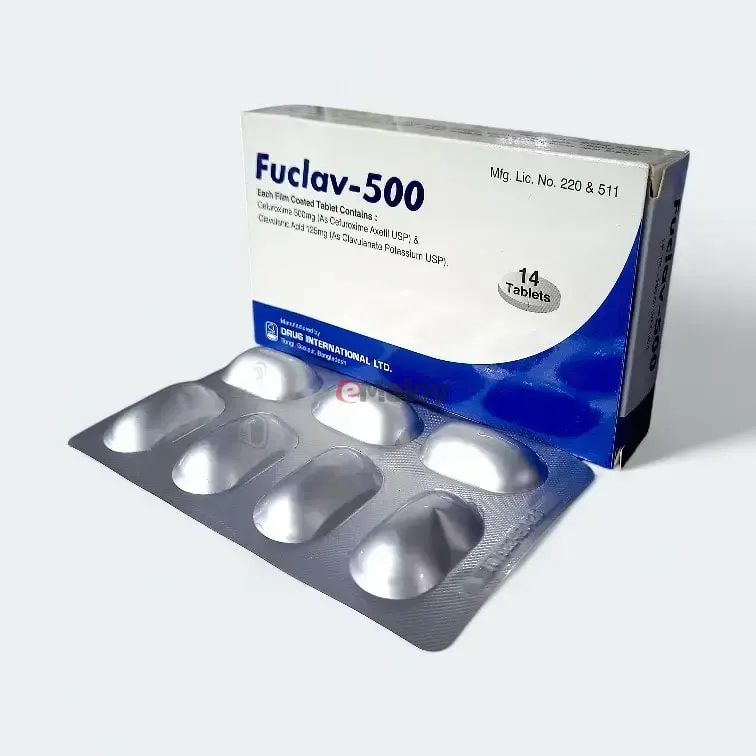
Fuclav contains Cefuroxime and Clavulanic acid.
- Cefuroxime: A second-generation cephalosporin antibiotic that kills bacteria by interfering with the formation of their cell walls.
- Clavulanic acid: A beta-lactamase inhibitor that protects Cefuroxime from being broken down by certain bacterial enzymes (beta-lactamases). This combination makes the medication effective against bacteria that have become resistant to other beta-lactam antibiotics.
Dosage & Administration
- Adults and Adolescents (13+ years):
- Pharyngitis/Tonsillitis, sinusitis, UTI: 250 mg twice daily.
- Bronchitis, pneumonia, skin infections: 250-500 mg twice daily.
- Uncomplicated Gonorrhea: 1000 mg as a single dose.
- Lyme disease: 500 mg twice daily for 20 days.
- Children (3 months to 12 years): Doses are weight-based.
- Pharyngitis/Tonsillitis: 20 mg/kg/day in two divided doses.
- Otitis media, sinusitis, impetigo: 30 mg/kg/day in two divided doses. The tablet can be taken with or without food.
Interactions & Contraindications
- Interactions: Concomitant use with probenecid can increase Cefuroxime blood levels. Medications that reduce stomach acid may decrease Cefuroxime's effectiveness.
- Contraindications: Do not use if you have a known allergy to cephalosporin antibiotics or a history of pseudomembranous colitis.
Side Effects
Common side effects include nausea, vomiting, diarrhea, and abdominal pain. Rarely, it may cause overgrowth of non-susceptible microorganisms, renal dysfunction, or severe allergic reactions like anaphylaxis.
Pregnancy & Lactation
While antibiotics are generally avoided in the first trimester, Fuclav is considered safe for use in later pregnancy. It is also safe during breastfeeding, as only small amounts are excreted in breast milk.
Precautions & Warnings
Use with caution in patients taking potent diuretics or those with a history of colitis.
Storage
Store in a cool, dry place below 30°C, away from light and moisture. Keep out of reach of children.




Comment