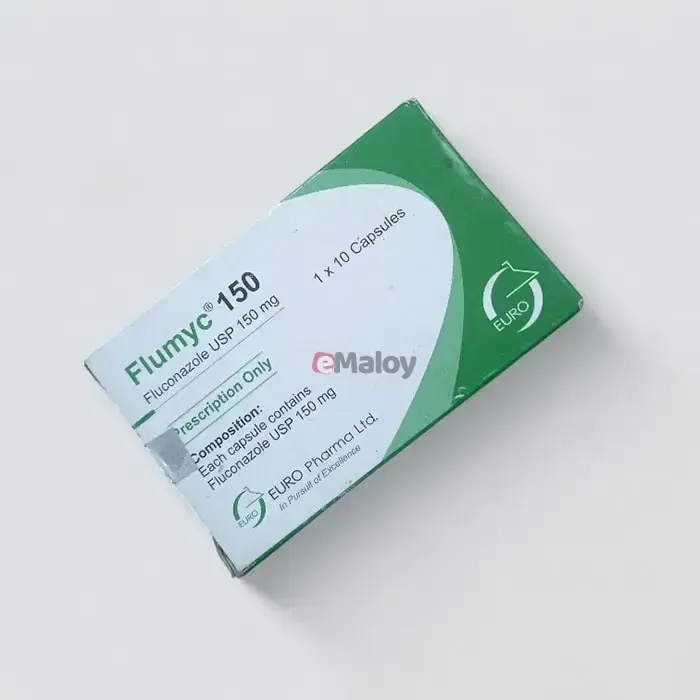
Flumyc (Fluconazole): A Triazole Antifungal Agent
Flumyc contains Fluconazole, a triazole antifungal agent. It works by inhibiting a key enzyme in the fungal cell membrane, which is essential for the synthesis of ergosterol. This leads to the disruption of the cell membrane and death of the fungus. Flumyc is indicated for the treatment and prevention of a wide range of fungal infections, including vaginal and oral candidiasis, various tinea infections, and serious invasive infections like cryptococcal meningitis.
How Flumyc Works (Pharmacology)
Fluconazole targets a specific enzyme system in fungi:
- Inhibits Cytochrome P-450 Enzymes: It is a potent inhibitor of the fungal cytochrome P-450 dependent enzyme system.
- Disrupts Ergosterol Synthesis: This enzyme system is crucial for the synthesis of ergosterol, a vital component of the fungal cell membrane.
- Fungicidal Action: By inhibiting ergosterol synthesis, Fluconazole disrupts the integrity of the fungal cell membrane, leading to its death.
Key Indications & Benefits
Flumyc is indicated for the treatment of:
- Superficial Fungal Infections: Vaginal, oropharyngeal, and esophageal candidiasis; tinea infections (Tinea corporis, cruris, pedis); pityriasis versicolor, and onychomycosis.
- Invasive Fungal Infections: Invasive candidal infections and cryptococcal infections, including meningitis.
- Prophylaxis: Prevention of cryptococcal meningitis and fungal infections in immunocompromised patients (e.g., those with neutropenia).
- Other infections: Fungal urinary tract infections and disseminated candidiasis.
Dosage & Administration
The dosage of Flumyc varies depending on the specific infection and patient factors.
- Adults:
- Vaginal Candidiasis: 150 mg as a single dose.
- Oropharyngeal Candidiasis: 200 mg on day 1, followed by 100 mg daily for 14 days.
- Tinea Infections: 150 mg weekly for 4-6 weeks.
- Onychomycosis: 150 mg weekly for up to 12 months.
- Invasive/Cryptococcal Infections: 400 mg on day 1, then 200-400 mg daily.
- Children (over 1 year):
- Superficial Candidiasis: 1-2 mg/kg daily.
- Systemic/Cryptococcal Infections: 3-6 mg/kg daily. Up to 12 mg/kg daily for serious infections.
- Renal Impairment: Dosage intervals or daily doses should be adjusted based on creatinine clearance. For patients on dialysis, one dose is given after each session.
Important Considerations & Warnings
It is crucial to discuss your full medical history with your doctor before taking Flumyc.
Contraindications:
- Hypersensitivity to Fluconazole or other triazole compounds.
Side Effects:
- Common: Gastrointestinal disturbances such as nausea, abdominal discomfort, diarrhea, and flatulence.
- Rare: Rash, anaphylaxis, hepatic necrosis, and exfoliative cutaneous reactions like Stevens-Johnson Syndrome.
Pregnancy & Lactation:
- Pregnancy: Not recommended for use during pregnancy or in women of childbearing potential unless adequate contraception is employed.
- Lactation: Fluconazole is found in human breast milk at concentrations similar to plasma, so its use in nursing mothers is not recommended.
Precautions & Warnings:
- Hepatic, Renal, Hematological Abnormalities: Monitor these functions, especially in patients with serious underlying diseases. Discontinue if a significant rise in liver enzymes occurs.
- Cutaneous Reactions: If a rash develops, especially in patients with systemic infections, monitor closely and consider discontinuing the drug if it progresses to a severe reaction.
- AIDS Patients: These patients are more prone to severe cutaneous reactions.
Drug Interactions:
- Warfarin: Increases prothrombin time; careful monitoring is recommended.
- Oral Sulphonylureas: May prolong their half-life, increasing the risk of hypoglycemia.
- Phenytoin: May increase phenytoin levels to a clinically significant degree.
- Rifampicin: Decreases fluconazole concentration; an increased fluconazole dose may be needed.
- Cyclosporin: May increase cyclosporin concentrations; monitoring is recommended.
- Theophylline: May decrease theophylline clearance; monitor for signs of toxicity.
Overdose Effects
- Symptoms: In healthy volunteers, doses up to 2 g showed a similar side effect profile to recommended doses.
- Treatment: Supportive measures, gastric lavage, and forced volume diuresis may be used. Hemodialysis can reduce plasma levels by about 50%.
Storage Conditions
Store in a dry place away from light and heat. Keep out of the reach of children.




Comment