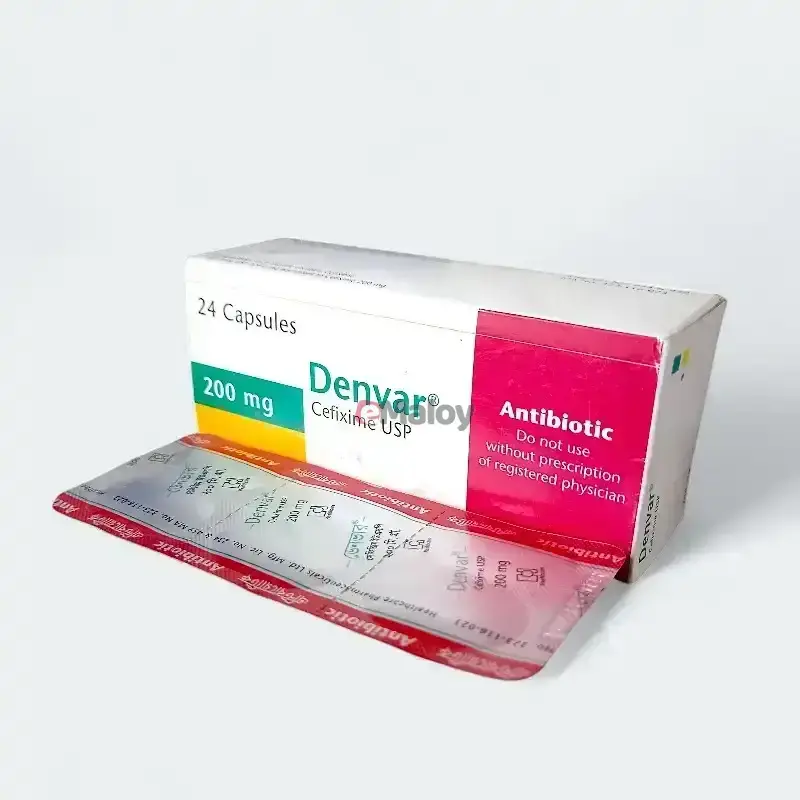
Denvar 200: A Third-Generation Cephalosporin Antibiotic
Denvar 200 is an orally active, third-generation cephalosporin antibiotic. It demonstrates strong bactericidal activity against a wide range of Gram-positive and Gram-negative organisms, making it effective for various acute infections. A key feature of Denvar is its high stability in the presence of beta-lactamase enzymes, which allows it to be effective against many bacteria that have developed resistance to penicillins and some other cephalosporins.
How Denvar 200 Works (Pharmacology)
Denvar contains Cefixime, which acts by interfering with the synthesis of the bacterial cell wall. This disruption leads to the death of the bacterial cells. Cefixime's high stability against beta-lactamase enzymes means it can effectively kill bacteria that produce these enzymes to break down other antibiotics.
Absorption of Cefixime is about 40% to 50%, whether taken with or without food.
Key Indications & Benefits
Denvar 200 is indicated for the treatment of acute infections caused by susceptible microorganisms, including:
- Upper Respiratory Tract Infections (URTI): Such as otitis media (ear infection), and other URTI where the causative organism is known or suspected to be resistant to common antibiotics, or where treatment failure poses a significant risk.
- Lower Respiratory Tract Infections (LRTI): Including bronchitis.
- Urinary Tract Infections (UTI): Such as cystitis, cystourethritis, and pyelonephritis.
Clinical efficacy has been demonstrated against common pathogens including Streptococcus pneumonia, Streptococcus pyogenes, Escherichia coli, Proteus mirabilis, Klebsiella species, Haemophilus influenzae (beta-lactamase positive and negative), Moraxella catarrhalis (beta-lactamase positive and negative), and Enterobacter species.
Dosage & Administration
Denvar 200 can be taken with or without food, as its absorption is not significantly modified by food. The usual course of treatment is 7 days, which can be extended up to 14 days if needed.
Adults and Children over 10 years:
- The recommended dosage is 200-400 mg daily, given as a single dose or in two divided doses, depending on infection severity.
Elderly:
- May be given the same dose as adults. However, renal function should be assessed, and dosage should be adjusted in severe renal impairment.
Children:
- The recommended dosage is 8 mg/kg/day, administered as a single dose or in two divided doses.
- For suspension (general guide):
- 6 months up to 1 year: 3.75 ml daily
- 1-4 years: 5 ml daily
- 5-10 years: 10 ml daily
- In typhoid: The recommended children's dose is 5 mg/kg body weight twice daily for 10-14 days.
- Children weighing more than 50 kg or older than 10 years should receive the recommended adult dose (200-400 mg daily).
- Children aged less than 6 months: Safety and efficacy have not been established.
Dosage in Renal Impairment:
- Creatinine clearance ≥20 ml/min: Normal dose and schedule can be given.
- Creatinine clearance <20 ml/min: A dose of 200 mg once daily should not be exceeded.
- Patients on chronic ambulatory peritoneal dialysis or hemodialysis should follow the same recommendation as those with creatinine clearances of less than 20 ml/min.
Always consult a registered physician for medication use.
Important Considerations & Warnings
Discuss your full medical history with your doctor before taking Denvar 200.
Contraindications:
- Patients with known hypersensitivity to cephalosporin antibiotics.
Side Effects:
- Denvar is generally well tolerated, with most adverse reactions being mild and self-limiting.
- Gastrointestinal disturbances (most frequent): Diarrhea and stool changes (more common with higher doses), nausea, abdominal pain, dyspepsia, vomiting, flatulence. Pseudomembranous colitis has been reported.
- Central Nervous System: Headache and dizziness.
- Hypersensitivity reactions: Rash, pruritus (itching), urticaria (hives), drug fever, and arthralgia (joint pain). These usually subside upon discontinuation.
- Hematological and Clinical Chemistry: Infrequent and reversible reports of thrombocytopenia (low platelet count), leukopenia (low white blood cell count), and eosinophilia (increased eosinophils). Mild transient changes in liver and renal function tests have been observed.
- Miscellaneous: Genital pruritus and vaginitis.
Interactions:
- Anticoagulant therapy (e.g., Warfarin): Increases in prothrombin times have been noted. Care should be taken when co-administering.
Pregnancy & Lactation:
- Pregnancy Category C: There are no adequate and well-controlled studies in pregnant women. Should be used during pregnancy only if clearly needed and the potential benefit justifies the potential risk to the fetus.
- Lactation: It is not known if Cefixime is excreted in human milk. Caution should be exercised when administered to a nursing woman. Denvar should not be used in nursing mothers unless considered essential by the physician.
Precautions & Warnings:
- Hypersensitivity: Use with caution in patients with known hypersensitivity to other drugs, especially penicillin-sensitive patients, due to potential partial cross-allergenicity between penicillins and cephalosporins. Severe reactions (including anaphylaxis) have occurred with both classes of drugs. If an allergic effect occurs, discontinue the drug and treat appropriately.
- Renal Impairment: Administer with caution in patients with markedly impaired renal function; dosage adjustment is necessary.
- Antibiotic-Associated Diarrhea: Treatment with broad-spectrum antibiotics can alter normal colon flora, potentially leading to overgrowth of Clostridium difficile, which produces a toxin causing antibiotic-associated diarrhea.
Overdose Effects:
- Gastric lavage may be indicated. No specific antidote exists.
- Denvar is not significantly removed from the circulation by hemodialysis or peritoneal dialysis.
- Adverse reactions in healthy volunteers receiving single doses up to 2 g did not differ from the profile seen at recommended doses.
Storage Conditions
Keep below 30°C temperature, protected from light & moisture. Keep out of the reach of children.



Comment