Indications
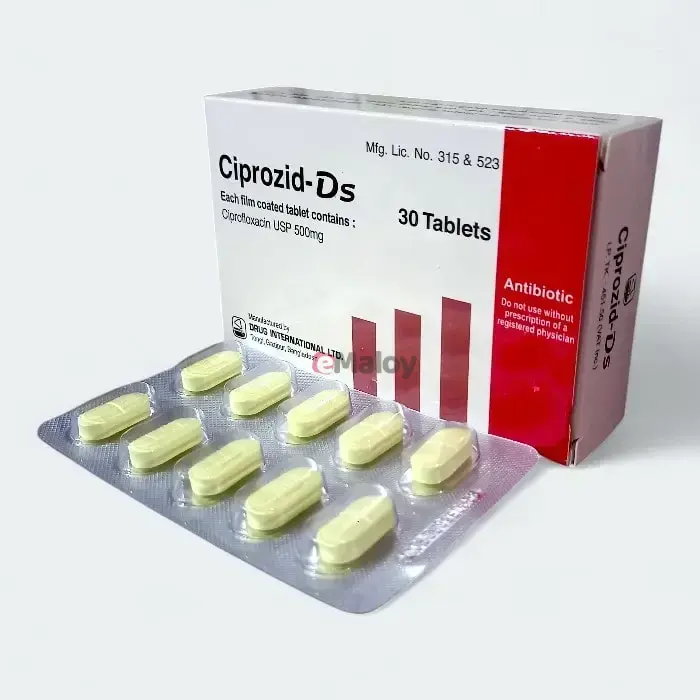
Ciprozid-DS (Ciprofloxacin) is a synthetic quinolone anti-infective agent indicated for treating single or mixed infections caused by susceptible organisms. Its broad-spectrum activity makes it useful for a wide range of infections, including those of the:
- Systemic: Septicemia, bacteremia, and infections in immunosuppressed patients.
- Respiratory Tract: Pneumonia, bronchitis, and cystic fibrosis exacerbations.
- Urinary Tract: Urethritis, cystitis, pyelonephritis, and prostatitis.
- Skin and Soft Tissue: Infected ulcers, wounds, and cellulitis.
- Gastrointestinal: Enteric fever and infective diarrhea.
- Other: Infections of the biliary tract, intra-abdominal infections, bone and joint infections, pelvic infections, ear, nose, and throat infections, and gonorrhea.
Pharmacology
Ciprofloxacin is a broad-spectrum quinolone antibiotic. Its bactericidal action results from interfering with the enzyme DNA gyrase, which is essential for bacterial DNA synthesis. It is rapidly and well-absorbed orally, distributes widely into body tissues, and has a half-life of about 3.5 hours. Approximately 30-50% of the drug is excreted unchanged in the urine.
Dosage
- Adults: Dosage ranges from 100-750 mg twice daily, depending on the infection type and severity.
- Urinary tract infections: 250-500 mg twice daily.
- Respiratory tract infections: 250-500 mg twice daily (up to 750 mg twice daily for Streptococcus pneumoniae).
- Gonorrhea: Single dose of 250 or 500 mg.
- Extended-release tablet (Uncomplicated UTI): 1000 mg once daily for three days.
- Intravenous (IV) Infusion:
- Urinary Tract Infection: 200-400 mg every 12 hours.
- Lower Respiratory Tract/Skin and Skin Structure: 400 mg every 12 hours (or every 8 hours for severe cases).
- Bone and Joint: 400 mg every 12 hours (or every 8 hours for severe cases) for over 4-6 weeks.
- Renal Impairment: Dosage adjustment may be required in patients with severe renal impairment (creatinine clearance <20 ml/min).
- Children and Adolescents: Use is not generally recommended due to the risk of arthropathy in immature animals. However, if the benefit outweighs the risk, the dosage should be 7.5-15 mg/kg/day in two divided doses.
Interaction
- Antacids/Supplements: Avoid concurrent administration with antacids containing Magnesium or Aluminum, sucralfate, or products containing Calcium, Iron, or Zinc. These should be taken at least 2 hours after or 6 hours before Ciprozid-DS.
- Dairy: Do not take with milk or dairy products alone as it can significantly reduce absorption.
Contraindications
Ciprofloxacin is contraindicated in patients with a history of hypersensitivity to Ciprofloxacin or other quinolones.
Side Effects
Common side effects include gastrointestinal disturbances (nausea, diarrhea), and CNS disturbances (headache, dizziness). Other reported effects include hypersensitivity reactions, joint pain, mild photosensitivity, and transient increases in liver enzymes. There is also a risk of retinal detachment, hypoglycemia, and mental health adverse effects.
Pregnancy & Lactation
Use is not recommended during pregnancy or for nursing mothers, as studies in immature animals have shown that Ciprofloxacin can cause arthropathy.
Precautions & Warnings
- Use with caution in patients with CNS disorders (e.g., epilepsy) that may predispose them to seizures.
- Patients should drink fluids liberally.
- The drug can be taken with or without meals.
Overdose Effects
Overdose can lead to seizures, hallucinations, confusion, abdominal discomfort, renal and hepatic impairment.
Therapeutic Class
Ciprozid-DS is a 4-Quinolone preparation and an anti-diarrheal antimicrobial drug.
Storage Conditions
Keep below 30°C, protected from light and moisture. Keep out of the reach of children.




Comment