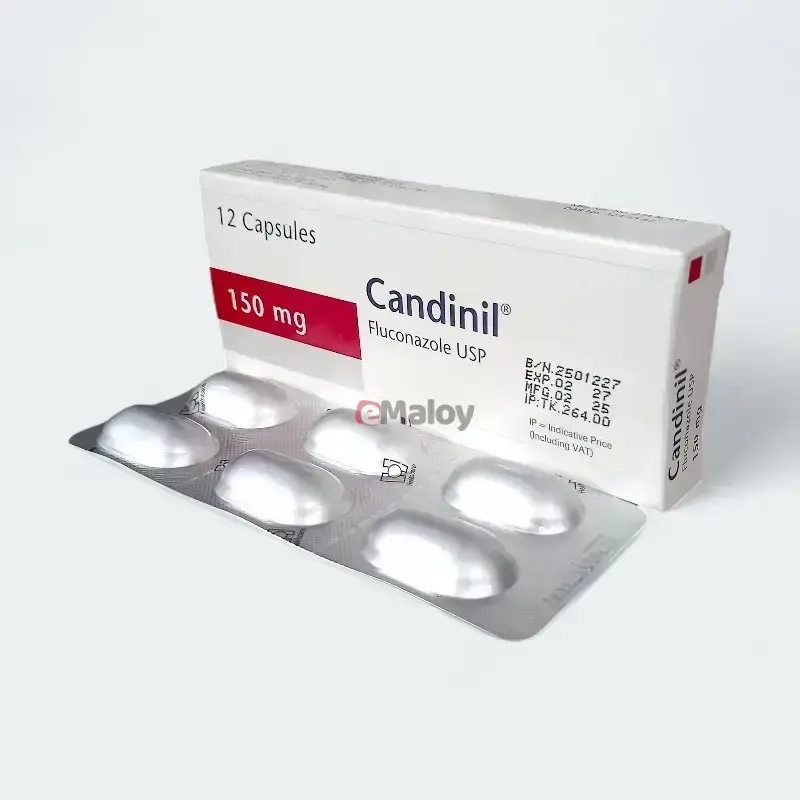
Candinil (Fluconazole): A Triazole Antifungal Agent
Candinil contains Fluconazole, a triazole antifungal agent. It is a potent inhibitor of fungal cytochrome P-450 dependent enzymes. Candinil is indicated for a wide range of fungal infections, including vaginal, oropharyngeal, and esophageal candidiasis, various forms of tinea, onychomycosis, and invasive or systemic fungal infections such as candidiasis and cryptococcal meningitis. It is also used for the prevention of fungal infections in immunocompromised patients. Candinil belongs to the therapeutic class of drugs for subcutaneous and mycoses.
How Candinil Works (Pharmacology)
Fluconazole's mechanism of action is to inhibit a crucial enzyme system in the fungus:
- Inhibits Cytochrome P-450 Enzymes: It is a potent inhibitor of fungal cytochrome P-450 dependent enzymes.
- Blocks Ergosterol Synthesis: This enzyme system is essential for the synthesis of ergosterol, a vital component of the fungal cell membrane.
- Disrupts Fungal Cell Membrane: By blocking ergosterol synthesis, fluconazole disrupts the structure and function of the fungal cell membrane, leading to the death of the fungal cell.
Key Indications & Benefits
Candinil is indicated for:
- Vaginal, oropharyngeal, and esophageal candidiasis.
- Various tinea infections (tinea corporis, cruris, pedis, kerion, pityriasis versicolor) and onychomycosis.
- Invasive candidal infections and cryptococcal infections (including meningitis).
- Prevention of cryptococcal meningitis.
- Prevention of fungal infections in immunocompromised patients (e.g., neutropenic cancer patients).
- Other systemic fungal infections such as coccidioidomycosis and histoplasmosis.
Dosage & Administration
Dosage varies based on the type of infection, age, and renal function. It can be administered orally or via IV infusion. Always consult a registered physician for specific dosage instructions.
- Vaginal Candidiasis (Adults): 150 mg as a single dose.
- Oropharyngeal Candidiasis (Adults): 200 mg on day 1, followed by 100 mg daily for 14 days.
- Onychomycosis (Adults): 150 mg weekly for 12 months.
- Systemic/Invasive infections (Adults): 400 mg on day 1, then 200-400 mg daily.
- Children (>1 year): Doses are weight-based (1-12 mg/kg daily) depending on the severity of the infection.
- Renal Impairment: Dosage intervals must be modified based on creatinine clearance. For single-dose therapy, no adjustment is required.
Important Considerations & Warnings
It is crucial to discuss your full medical history with your doctor before taking Candinil.
Contraindications:
- Known hypersensitivity to Fluconazole or other triazole compounds.
Side Effects:
- Most common: Nausea, abdominal discomfort, diarrhea, and flatulence.
- Rare: Rash, anaphylaxis.
- Very rare: Severe cutaneous reactions like Stevens-Johnson Syndrome and toxic epidermal necrolysis.
Pregnancy & Lactation:
- Pregnancy: It should not be used in pregnancy or in women of childbearing potential unless adequate contraception is employed, as adverse fetal effects have been seen in animals at high doses.
- Lactation: Fluconazole is found in human breast milk at concentrations similar to plasma. Its use in nursing mothers is not recommended.
Precautions & Warnings:
- Hepatic, Renal, and Hematological Abnormalities: Abnormalities in these functions have been observed, particularly in seriously ill patients. If a significant rise in liver enzymes occurs, the risk-benefit ratio of continued treatment should be assessed.
- Cutaneous Reactions: If a rash develops, especially in patients with superficial infections, treatment should be discontinued. Patients with invasive infections should be closely monitored.
- Driving/Machinery: Therapy is unlikely to impair a patient's ability to drive or use machinery.
Drug Interactions:
- Warfarin: May increase prothrombin time.
- Oral Sulfonylureas: May prolong their half-life, potentially causing hypoglycemia.
- Hydrochlorothiazide: May increase plasma concentrations of fluconazole.
- Phenytoin: May increase phenytoin levels.
- Rifampicin: May decrease fluconazole plasma levels; a dose increase may be needed.
- Cyclosporin: May slowly increase cyclosporin concentrations.
- Oral Contraceptives: Unlikely to affect the efficacy of combined oral contraceptives at the doses studied.
- Theophylline: May decrease the clearance of theophylline.
Overdose Effects
- In the event of an overdose, supportive and symptomatic treatment is recommended.
- Forced volume diuresis may increase elimination.
- Hemodialysis can decrease plasma levels by approximately 50%.
Storage Conditions
Keep in a dry place, away from light and heat. Keep out of the reach of children.




Comment