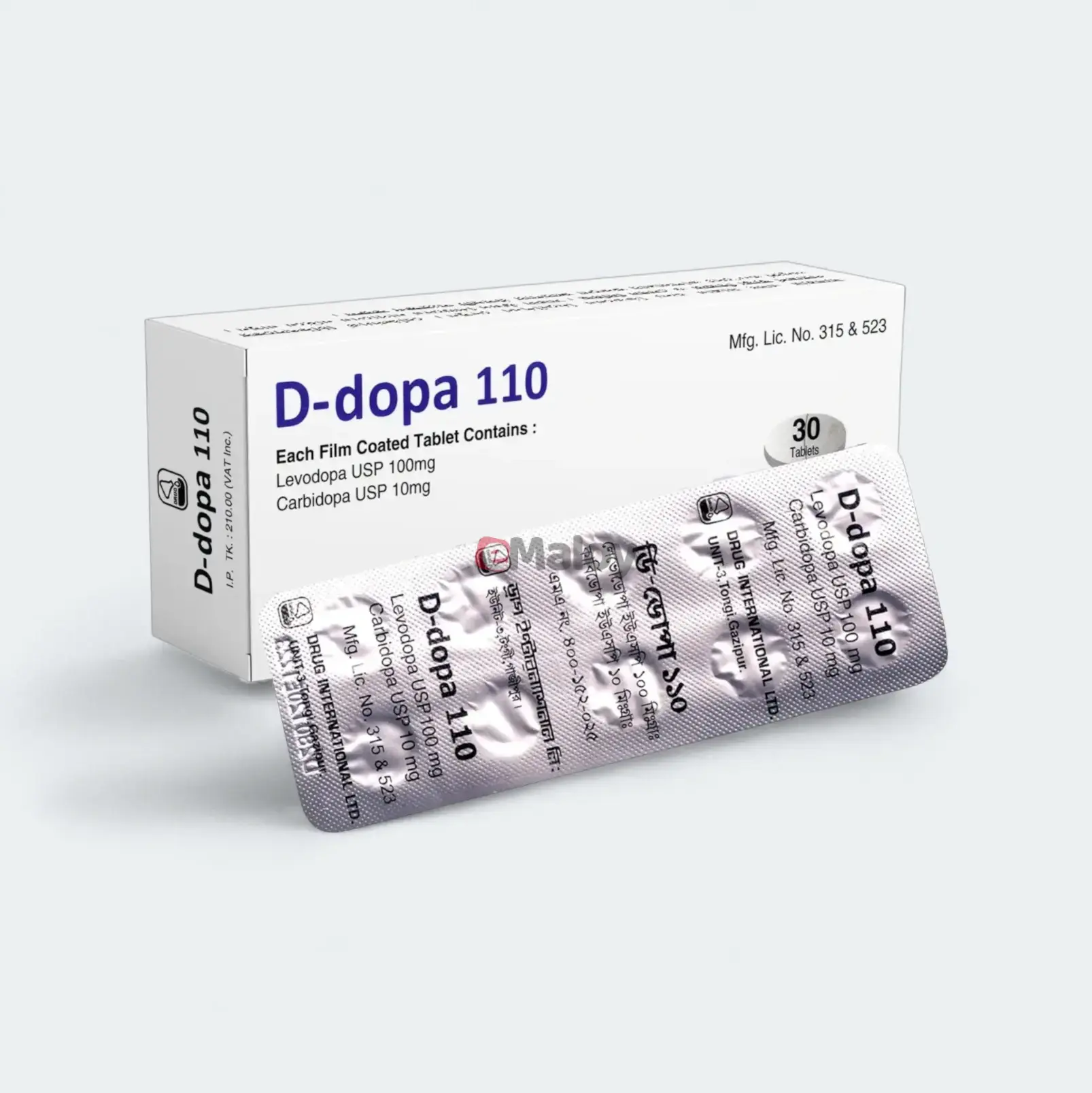
D-Dopa 110 Tablet is a combination medicine containing Levodopa (100mg) and Carbidopa (10mg) .
Brand Name: D-Dopa 110
Generic Name: Levodopa + Carbidopa
Manufacturer: Drug International Ltd. (in Bangladesh)
Indications: D-Dopa 110 is indicated for the treatment of:
- Idiopathic Parkinson's disease.
- Post-encephalitic parkinsonism.
- Symptomatic parkinsonism which may follow injury to the nervous system by carbon monoxide intoxication or manganese intoxication.
It helps to relieve many symptoms of Parkinson's disease, particularly rigidity and slowness of movement (bradykinesia). It can also help with tremor, difficulty swallowing (dysphagia), excessive salivation (sialorrhea), and balance problems (postural instability). Levodopa with carbidopa may also improve motor recovery after a stroke when given before physiotherapy.
Dosage and Administration: Dosage is highly individualized and should be determined by a physician. Some general guidelines:
- Initial Dosage: Usually one tablet (100mg Levodopa/10mg Carbidopa) three or four times a day.
- Titration: Dosage may be increased gradually, by one tablet every day or every other day, until an optimal response is reached. The maximum dose is usually eight tablets per day (2 tablets four times a day).
- It can be taken with or without food. However, it may be better to avoid high-protein meals and dairy products as they can reduce the amount of medication absorbed. Taking it at the same time each day helps maintain a consistent level in the body.
Side Effects: Common side effects may include:
- Nausea
- Vomiting
- Dryness of the mouth
- Constipation
- Dizziness
- Sleepiness
- Headache
- Abnormal dreams
- Anxiety
- Insomnia (difficulty sleeping)
- Abnormality of voluntary movements (dyskinesia)
- Orthostatic hypotension (sudden lowering of blood pressure on standing)
Less common but potentially serious side effects can occur. It is important to report any unusual symptoms to your doctor.
Precautions:
- Use with caution in patients with cardiovascular or pulmonary disease, asthma, kidney, liver, or endocrine disease, peptic ulcer, and wide-angle glaucoma.
- May cause drowsiness and sudden sleep attacks; avoid driving or operating machinery until you know how it affects you.
- Rise slowly from sitting or lying down to prevent dizziness.
- Avoid or reduce a high-protein diet.
- Inform your doctor about any history of depression, hallucinations, or other mental changes.
- Use with caution in the elderly.
- Not recommended for use in children under 18 years.
- Exercise caution in patients with a history of melanoma.
Contraindications: D-Dopa 110 is contraindicated in patients with:
- Hypersensitivity to carbidopa or levodopa.
- Narrow-angle glaucoma.
- Melanoma or a history of unexplained skin lesions.
- Concomitant use with nonselective monoamine oxidase (MAO) inhibitors (these should be discontinued at least two weeks before starting D-Dopa 110).
Drug Interactions: D-Dopa 110 can interact with various medications, including:
- Antihypertensive drugs (may cause symptomatic postural hypotension).
- Tricyclic antidepressants (may cause hypertension and dyskinesia).
- Iron supplements (may reduce the bioavailability of carbidopa and/or levodopa).
- Isoniazid and dopamine-2 receptor antagonists (e.g., phenothiazines, butyrophenones, risperidone) may reduce the therapeutic effects of levodopa.
- Phenytoin and papaverine may counteract the benefits of levodopa.
- Selegiline (a selective MAO-B inhibitor) may have a synergistic effect but can also cause severe orthostatic hypotension.
Storage: Store as directed on the product packaging, usually in a cool and dry place. Keep out of reach of children.
Important Note: This information is for general knowledge and informational purposes only and does not substitute professional medical advice. Always consult your doctor or pharmacist for specific instructions and guidance regarding your medication. They can assess your individual medical condition and provide the most appropriate advice.



Comment