Clopid-AS: A Combination Antiplatelet for Cardiovascular Risk Reduction
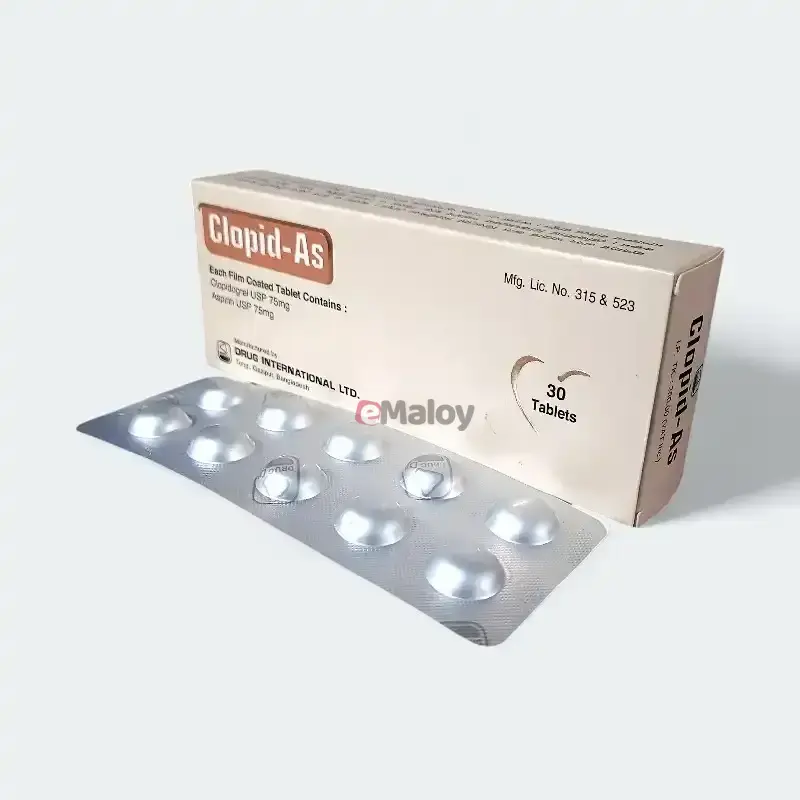
Clopid-AS is a combination medication containing Clopidogrel and Aspirin, designed to reduce the risk of serious cardiovascular events such as myocardial infarction (MI, or heart attack) and stroke. It is used in patients with various cardiovascular conditions.
How Clopid-AS Works (Pharmacology)
Clopid-AS combines the actions of two antiplatelet agents:
- Clopidogrel: This is a prodrug that, once metabolized, irreversibly binds to the P2Y12 class of ADP receptors on platelets. This binding inhibits platelet activation and aggregation, preventing blood clot formation. Its effect on platelet aggregation becomes dose-dependent within 2 hours of a single oral dose and reaches steady state between 3 and 7 days with repeated daily doses. Clopidogrel is extensively metabolized by the liver, with its main circulating metabolite (a carboxylic acid derivative) having no effect on platelet aggregation. About 50% is excreted in urine and 46% in feces within 5 days.
- Aspirin: This drug inhibits platelet aggregation by irreversibly inhibiting platelet cyclooxygenase, which in turn prevents the generation of thromboxane A2. Thromboxane A2 is a powerful inducer of platelet aggregation and vasoconstriction (narrowing of blood vessels).
The combination of these two mechanisms provides more potent antiplatelet effects than either drug alone.
Key Indications & Benefits
Clopid-AS is indicated to reduce the rate of MI and stroke in patients with:
- Acute Coronary Syndrome (ACS):
- Non-ST-segment elevation ACS [unstable angina (UA)/non-ST-elevation myocardial infarction (NSTEMI)].
- Acute ST-segment elevation ACS [ST-elevation myocardial infarction (STEMI)].
- Recent MI, Recent Stroke, or Established Peripheral Arterial Disease: In patients with a history of these conditions.
Dosage & Administration
Clopid-AS is given orally with or without food.
- Acute Coronary Syndrome (Unstable Angina/Non-Q-wave MI):
- Initiate with a single 300 mg loading dose of Clopidogrel (typically from the separate Clopidogrel component if available, or equivalent from a combination product if prescribed this way by your doctor), then continue with 75 mg once daily.
- Aspirin (75 mg-325 mg once daily) should be initiated and continued in combination with Clopidogrel.
- Note: In studies, most ACS patients also received heparin acutely.
- Recent MI, Recent Stroke, or Established Peripheral Arterial Disease:
- 75 mg once daily (Clopidogrel component) without a loading dose. (Aspirin component dosage will be as prescribed).
Special Populations:
- No dosage adjustment is necessary for elderly patients or patients with renal impairment.
Always consult a registered physician for medication use.
Important Considerations & Warnings
It is crucial to discuss your full medical history with your doctor before taking Clopid-AS.
Contraindications:
- Hypersensitivity to Clopidogrel, Aspirin, or any component of the product.
- Active pathological bleeding, such as peptic ulcer or intracranial hemorrhage.
- Third trimester of pregnancy (due to Aspirin component).
Side Effects: Clopid-AS is generally well tolerated. However, as it's an antiplatelet, bleeding is the most significant side effect.
- Common: Bleeding, diarrhea, gastrointestinal discomfort, hemorrhage, skin reactions.
- Rare but Serious: Thrombotic Thrombocytopenic Purpura (TTP) has been reported, requiring urgent treatment (e.g., plasmapheresis). Reye's syndrome may develop in children with chickenpox or flu symptoms due to the Aspirin component. Hypersensitivity reactions (rash, angioedema, hematologic reactions) can occur.
Interactions:
- Aspirin: Clopidogrel potentiates Aspirin's effect on collagen-induced platelet aggregation.
- Heparin: Co-administration does not necessitate heparin dose modification or alter its effect on coagulation.
- Nonsteroidal Anti-Inflammatory Drugs (NSAIDs): Concomitant use is associated with increased gastrointestinal blood loss. Co-administer with caution.
- Warfarin: Safety of co-administration is not established; use with caution.
- CYP2C19 Inhibitors (e.g., Omeprazole or Esomeprazole): These can impair Clopidogrel's metabolism to its active form, potentially reducing its antiplatelet activity.
Pregnancy & Lactation:
- Pregnancy: No adequate and well-controlled studies. Should be used during the first and second trimesters only if clearly needed. Contraindicated during the third trimester due to potential adverse effects of Aspirin on the fetus and labor.
- Lactation: It is unknown if Clopidogrel is excreted in human milk, but Aspirin is known to be excreted in human milk. This drug should be discontinued during breastfeeding, considering the importance of the drug to the mother.
Precautions & Warnings:
- Prolonged Bleeding Time: Clopid-AS prolongs bleeding time.
- Discontinuation: Discontinuation increases the risk of cardiovascular events. For elective surgery with a major bleeding risk, discontinue 5 days prior and resume as soon as hemostasis is achieved.
- Children: Should not be given to children, particularly those under 12 years, unless expected benefits outweigh possible risks, due to the risk of Reye's syndrome with Aspirin.
Overdose Effects:
- Clopidogrel overdose: May lead to bleeding complications; platelet transfusion may restore clotting ability.
- Aspirin intoxication: Moderate symptoms include dizziness, headache, tinnitus, confusion, and GI symptoms. Severe intoxication can cause respiratory alkalosis, respiratory acidosis, metabolic acidosis, hyperthermia, and dehydration. Treatment involves inducing vomiting/gastric lavage (if needed) and symptomatic support, potentially hemodialysis for severe cases.
Storage Conditions
Keep in a cool & dry place (below 30°C), protected from light & moisture. Do not freeze. Keep out of the reach of children.




Comment