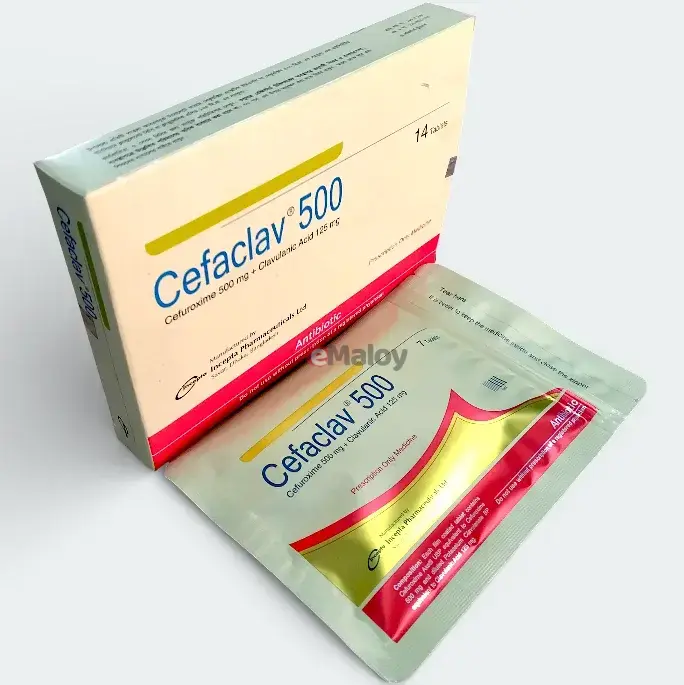
Cefaclav: A Powerful Antibiotic for Bacterial Infections
Cefaclav is an orally active antibiotic indicated for the treatment of various infections caused by susceptible bacteria. It is particularly effective against infections where the bacteria may produce beta-lactamase enzymes, which can inactivate other antibiotics.
How Cefaclav Works (Pharmacology)
Cefaclav is a combination medication containing Cefuroxime and Clavulanic Acid, which work together to eliminate bacterial infections:
- Cefuroxime: This is a second-generation cephalosporin antibiotic that is bactericidal, meaning it kills bacteria. It works by interfering with the synthesis of the bacterial cell wall, specifically by inhibiting the transpeptidation process, which is essential for cell wall formation. Cefuroxime is active against a wide range of Gram-positive and Gram-negative susceptible organisms.
- Clavulanic Acid: This component is a naturally derived beta-lactamase inhibitor. Beta-lactamase enzymes are produced by some bacteria to break down and inactivate beta-lactam antibiotics like Cefuroxime. Clavulanic acid binds irreversibly to these enzymes, inactivating them. This protective action ensures that Cefuroxime remains effective against bacteria that would otherwise be resistant due to beta-lactamase production.
The combination provides a robust solution for treating bacterial infections, including those caused by beta-lactam resistant strains.
Key Indications & Benefits
Cefaclav is used to treat various bacterial infections, including:
- Pharyngitis/Tonsillitis: Caused by Streptococcus pyogenes.
- Acute Bacterial Otitis Media: Caused by Streptococcus pneumoniae, Haemophilus influenzae, Moraxella catarrhalis (including beta-lactamase producing strains), or Streptococcus pyogenes.
- Acute Bacterial Maxillary Sinusitis.
- Acute Bacterial Exacerbation of Chronic Bronchitis.
- Secondary Bacterial Infections of Acute Bronchitis.
- Uncomplicated Skin and Skin Structure Infections (SSTI).
- Uncomplicated Urinary Tract Infections (UTI).
- Uncomplicated Gonorrhoea.
- Community-Acquired Pneumonia.
- MDR Typhoid Fever (Multi-Drug Resistant Typhoid Fever).
- Early Lyme Disease.
Dosage & Administration
Cefaclav tablets can be taken without regard to food. It is important to complete the full course of treatment as prescribed by your doctor, even if you start feeling better.
Adolescents and Adults (13 years and older):
- Pharyngitis/Tonsillitis: 250 mg twice daily for 5-10 days.
- Acute Bacterial Maxillary Sinusitis: 250 mg twice daily for 10 days.
- Acute Bacterial Exacerbation of Chronic Bronchitis: 250-500 mg twice daily for 10 days.
- Secondary Bacterial Infections of Acute Bronchitis: 250-500 mg twice daily for 5-10 days.
- Uncomplicated Skin and Skin Structure Infections: 250-500 mg twice daily for 10 days.
- Uncomplicated Urinary Tract Infections: 250 mg twice daily for 7-10 days.
- Uncomplicated Gonorrhoea: 1000 mg twice daily as a single dose.
- Community-Acquired Pneumonia: 250-500 mg twice daily for 5-10 days.
- MDR Typhoid Fever: 500 mg twice daily for 10-14 days.
- Early Lyme Disease: 500 mg twice daily for 20 days.
Pediatric Patients (3 months to 12 years):
- Pharyngitis/Tonsillitis: 20 mg/kg/day twice daily for 5-10 days.
- Acute Otitis Media: 30 mg/kg/day twice daily for 10 days.
- Acute Bacterial Maxillary Sinusitis: 30 mg/kg/day twice daily for 10 days.
- Impetigo: 30 mg/kg/day twice daily for 10 days.
Always consult a registered physician for medication use.
Important Considerations & Warnings
It is crucial to discuss your full medical history with your doctor before taking Cefaclav.
Contraindications:
- Patients with a known allergy to cephalosporin antibiotics.
- Patients with a history of Pseudomembranous Colitis.
Side Effects:
Cefaclav is generally well tolerated. However, some side effects may occur:
- Gastrointestinal: Nausea, vomiting, diarrhea, abdominal discomfort or pain. Diarrhea may occur; taking probiotics might help. If you notice bloody stools or develop abdominal cramps, consult your doctor.
- Other: Rarely (<0.2%) renal dysfunction, anaphylaxis (severe allergic reaction), angioedema (swelling under the skin), pruritus (itching), rash, and serum sickness-like urticaria (hives).
- Superinfection: As with other broad-spectrum antibiotics, prolonged administration may lead to the overgrowth of non-susceptible microorganisms.
Interactions:
- Probenecid: Concomitant administration increases the serum concentration of Cefuroxime.
- Drugs that reduce gastric acidity (e.g., antacids, H2-receptor blockers): May result in lower bioavailability of Cefuroxime and could reduce the effect of postprandial absorption.
Pregnancy & Lactation:
- Pregnancy: While all antibiotics should ideally be avoided in the first trimester, Cefaclav can generally be used safely in later pregnancy to treat urinary and other infections. However, it is recommended to use this medicine only after consulting your doctor.
- Lactation: Cefuroxime-Clavulanic Acid is excreted into breast milk in small quantities. The possibility of sensitizing the infant should be kept in mind. It is considered safe to use during breastfeeding, but always consult your doctor.
Precautions & Warnings:
- Hypersensitivity: Cefuroxime should be given with care to patients who have a history of hypersensitivity to other drugs, especially penicillins, due to the possibility of cross-allergenicity. If an allergic reaction occurs, discontinue the drug immediately and seek medical attention.
- Diuretics: Use with care in patients receiving concurrent treatment with potent diuretics.
- History of Colitis: Administer with caution to patients with a history of colitis.
- General: Do not skip any doses and complete the full course of treatment. Do not use leftover medicine for future infections without consulting a doctor.
Storage Conditions
Store in a cool, dry place (below 30°C), away from light and moisture. Keep out of the reach of children.



Comment