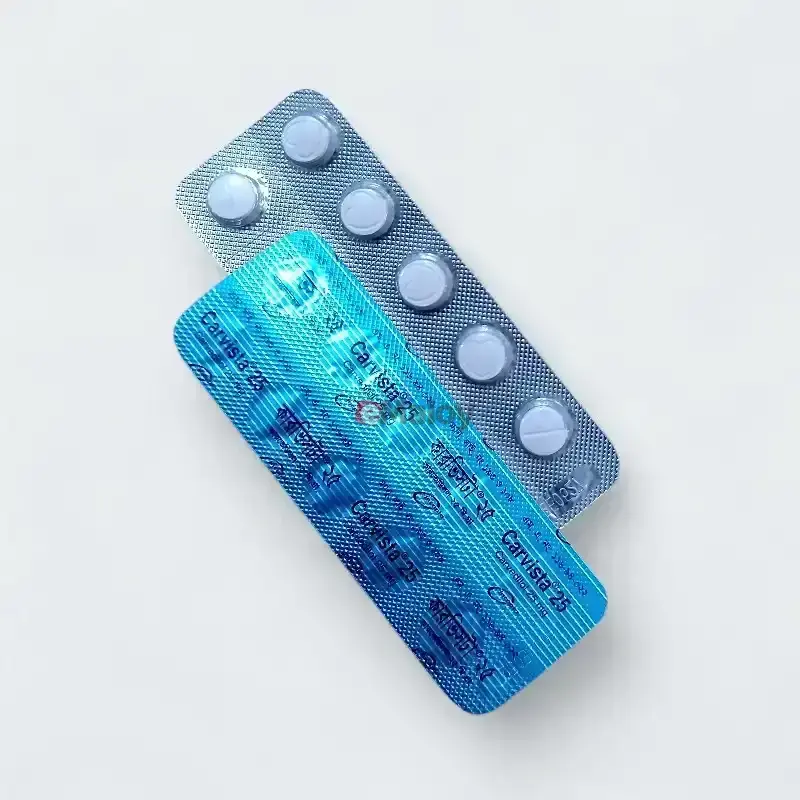
Carvista: A Dual-Action Beta-Blocker for Heart Conditions
Carvista is a cardiovascular medication primarily indicated for the treatment of mild, moderate, or severe heart failure of ischemic or cardiomyopathic origin. It is typically used in conjunction with other heart failure medications such as digitalis, diuretics, and ACE inhibitors to reduce disease progression, including cardiovascular death, hospitalization, or the need to adjust other medications. Carvista may also be used in patients who cannot tolerate an ACE inhibitor or who are not receiving digitalis, hydralazine, or nitrate therapy. Additionally, Carvista is used in the treatment of hypertension (high blood pressure) and angina pectoris (chest pain).
How Carvista Works (Pharmacology)
Carvista contains Carvedilol, a unique cardiovascular drug with a dual pharmacological action:
- Non-selective Beta-adrenergic Receptor Antagonism: Carvedilol blocks both beta-1 and beta-2 adrenergic receptors. This action helps to slow the heart rate, reduce the force of heart muscle contraction, and lower blood pressure.
- Alpha-adrenergic Antagonistic Activity: Carvedilol also blocks alpha-1 adrenergic receptors, leading to vasodilation (widening of blood vessels). This further contributes to blood pressure reduction and reduces the workload on the heart.
- Additional Properties: It possesses antiproliferative properties (inhibits cell growth) and acts as a scavenger of reactive free oxidant radicals, which may contribute to its beneficial effects in heart failure by reducing oxidative stress.
These combined actions make Carvedilol effective in reducing the workload on the heart, improving blood flow, and managing symptoms in various cardiovascular conditions.
Key Indications & Benefits
- Heart Failure (Mild, Moderate, Severe): Reduces disease progression, cardiovascular death, and hospitalizations, often as part of a multi-drug regimen. Can be used in patients intolerant to ACE inhibitors or not on certain other therapies.
- Hypertension (High Blood Pressure): Effectively lowers blood pressure.
- Angina Pectoris (Chest Pain): Helps in the management of chest pain.
Always consult a registered physician for medication use.
Dosage & Administration
Carvista dosage should be individualized by a physician.
- In Hypertension:
- Initially, 12.5 mg once daily.
- Increased after 2 days to the usual dose of 25 mg once daily.
- If necessary, the dose may be further increased at intervals of at least 2 weeks to a maximum of 50 mg daily in single or divided doses.
- In elderly patients, an initial dose of 12.5 mg daily may provide satisfactory control.
- In Angina Pectoris:
- Recommended initial dose: 12.5 mg twice daily for the first 2 days.
- Thereafter, the recommended dosage is 25 mg twice daily.
- For elderly patients, the maximum daily dose is 50 mg daily in divided doses.
- In Heart Failure:
- Initially, 3.125 mg twice daily (with food).
- The dose may be increased at intervals of at least 2 weeks to 6.25 mg twice daily, then to 12.5 mg twice daily, then to 25 mg twice daily.
- The dose may be increased to the highest dose tolerated, with a maximum of 25 mg twice daily in patients less than 85 kg body-weight and 50 mg twice daily in patients over 85 kg.
Always consult a registered physician for medication use.
Important Considerations & Warnings
It is crucial to discuss your full medical history with your doctor before taking Carvista.
Contraindications: Carvedilol is contraindicated in patients with:
- Decompensated heart failure requiring intravenous inotropic therapy.
- Bronchial asthma or related bronchospastic conditions.
- Second or third-degree AV block (unless a permanent pacemaker is in place).
- Sick sinus syndrome (unless a permanent pacemaker is in place).
- Cardiogenic shock.
- Severe bradycardia (very slow heart rate).
- Known hypersensitivity to carvedilol.
Side Effects: Common side effects include:
- Postural hypotension (dizziness upon standing)
- Dizziness
- Headache
- Fatigue
- Gastro-intestinal disturbances (e.g., nausea, diarrhea)
- Bradycardia (slow heart rate)
- Occasionally: Diminished peripheral circulation, peripheral edema (swelling), painful extremities, dry mouth, dry eyes, eye irritation or disturbed vision, impotence, disturbances of micturition, influenza-like symptoms.
- Rarely: Angina, AV block, exacerbation of intermittent claudication or Raynaud's phenomenon, allergic skin reactions, exacerbation of psoriasis, nasal stuffiness, wheezing, depressed mood, sleep disturbances, paresthesia (numbness/tingling), heart failure, changes in liver enzymes, thrombocytopenia (low platelet count), leukopenia (low white blood cell count).
Interactions:
- Digoxin: Concomitant use may increase digoxin levels. Increased monitoring of digoxin is recommended when initiating, adjusting, or discontinuing Carvista.
- Rifampin: Pretreatment with rifampin significantly decreases carvedilol levels (60% decrease in Cmax and AUC).
- Warfarin: Carvista did not alter the in vitro plasma protein binding of warfarin, but caution is still advised with anticoagulants.
- Clonidine: Beta-receptor antagonists (like carvedilol) can potentiate the pressor reaction that may follow sudden withdrawal of clonidine treatment.
- Other antihypertensives or cardiac medications: Concomitant use with other blood pressure lowering agents or drugs affecting heart rate/conduction may lead to additive effects (e.g., excessive hypotension or bradycardia).
Pregnancy & Lactation:
- Pregnancy: Carvedilol should not be used during pregnancy as no studies have been performed in this group in humans. Animal studies have shown that carvedilol crosses the placental barrier.
- Lactation: Carvedilol should not be used during breast-feeding, as animal studies have shown it is excreted in breast milk and no human studies have been performed. An alternative method of infant feeding should be used if Carvista therapy is considered necessary in nursing women.
Precautions & Warnings:
- Hepatic Impairment: Take caution in patients with hepatic impairment.
- Heart Failure Monitoring: When initiating and increasing each dose in heart failure patients, monitor clinical status for 2-3 hours.
- Renal Function: Before increasing dose, ensure that renal function and heart failure are not deteriorating.
- Withdrawal: Do not discontinue carvedilol therapy abruptly, especially in patients with ischemic heart disease, as it can exacerbate angina or lead to myocardial infarction. The dose should be gradually tapered over 1-2 weeks.
- Diabetics: Beta-blockers can mask symptoms of hypoglycemia (e.g., rapid heart rate). Monitor blood glucose carefully.
- Peripheral Vascular Disease: May exacerbate symptoms of arterial insufficiency.
Storage Conditions
Keep below 30°C temperature, away from light & moisture. Keep out of the reach of children.




Comment