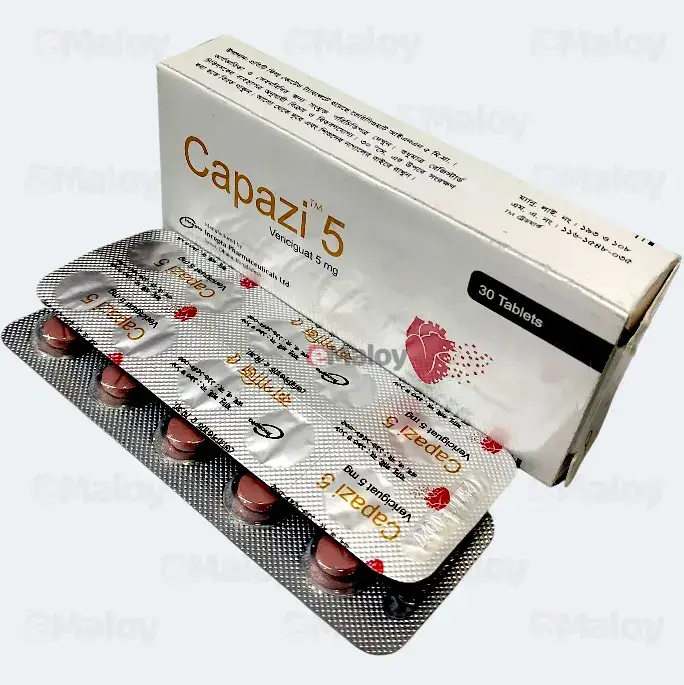
Capazi (Vericiguat): Soluble Guanylate Cyclase (sGC) Stimulator
Capazi contains Vericiguat, a first-in-class stimulator of soluble guanylate cyclase (sGC), an essential enzyme in the nitric oxide (NO) signaling pathway.
Chronic heart failure severely impairs your body's natural synthesis of nitric oxide, leading to reduced sGC activity, vascular constriction, and negative cardiac remodeling (tissue thickening). Vericiguat directly stimulates the sGC enzyme—both independently of and in synergy with your body's remaining nitric oxide. This action spikes intracellular levels of cyclic guanosine monophosphate (cGMP), inducing smooth muscle relaxation, targeted vasodilation, and a significant reduction in the workload of the failing heart.
📋 Indications: Advanced Heart Failure Management
Capazi is specifically indicated for adults with symptomatic chronic heart failure and a reduced ejection fraction (LVEF less than 45%). It is prescribed following a recent hospitalization for heart failure, or a clinical need for outpatient intravenous (IV) diuretics, to:
- Reduce the risk of cardiovascular death.
- Lower the frequency of recurring heart failure hospitalizations.
🥄 Dosage, Titration & Food Administration
To achieve its therapeutic effect, Capazi must follow a strict, phased step-up dosing schedule and be taken under close medical monitoring.
- Food Dependency: Capazi must always be taken with food. When taken with a meal, its absolute absorption bioavailability climbs to an impressive 93%.
- Initial Dose: Begin with 2.5 mg orally once daily.
- Step-Up Titration: Assuming the medication is well-tolerated and blood pressure remains stable, double the dosage approximately every 2 weeks:
- Weeks 1–2: 2.5 mg once daily.
- Weeks 3–4: 5 mg once daily.
- Week 5 onwards (Target Maintenance): 10 mg once daily.
- Swallowing Difficulties: If you are unable to swallow tablets whole, Capazi may be crushed and mixed thoroughly with a small amount of water immediately before swallowing.
⚠️ Critical Safety Warnings & Drug Interactions
- Severe Hypotension Risk: Because Capazi is a potent vasodilator, its most common side effect is symptomatic low blood pressure (hypotension). In the event of an accidental overdose, profound hypotension may occur, requiring immediate medical support. (Note: The drug cannot be effectively filtered out via hemodialysis due to its high protein-binding nature).
- Anemia Warning: Capazi can cause a drop in red blood cells (anemia). Regular blood work may be ordered by your cardiologist.
- Banned Drug Interactions:
- Do not take with other sGC Stimulators (such as Riociguat). This combination is strictly contraindicated.
- Do not take with PDE-5 Inhibitors (such as Sildenafil/Viagra, Tadalafil/Cialis). Combining these medications can trigger a sudden, life-threatening crash in blood pressure.
🤰 Pregnancy & Lactation: Strict Teratogenicity Protocol
- Pregnancy Contraindication: Vericiguat causes severe fetal harm and birth defects. It is entirely contraindicated during pregnancy.
- Testing & Contraception: A negative pregnancy test must be clinically confirmed before starting Capazi. Females of childbearing potential must utilize highly effective contraception throughout the entire duration of the treatment, and continue using it for at least one full month after taking the final dose.
- Nursing Mothers: Due to the high potential for serious adverse drug reactions in a developing infant, women must not breastfeed while taking Capazi.
📦 Special Populations & Storage
- Organ Function: No dosage adjustments are needed for elderly patients, individuals with mild-to-moderate liver impairment, or patients with an eGFR greater than or equal to 15 mL/min/1.73m² (who are not on dialysis).
- Storage: Keep stored below 30°C. Keep the tablets entirely safe from light and moisture, and strictly out of the reach of children.



Comment