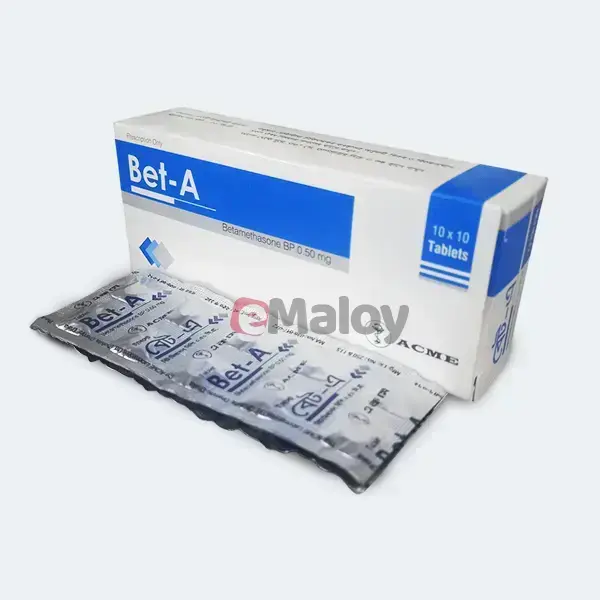
Bet-A, Tablet - (500mcg) contains Betamethasone 0.5 mg (which is equivalent to 500mcg). It is manufactured by The ACME Laboratories Ltd. in Bangladesh.
Indications:
Bet-A is a corticosteroid used to suppress various inflammatory and allergic disorders. These include:
- Rheumatoid arthritis and rheumatoid carditis
- Severe hypersensitivity (allergic) reactions
- Bronchial asthma
- Inflammatory skin disorders such as eczema, psoriasis, lichen planus
- Congenital adrenal hyperplasia
- Inflammatory conditions affecting the ear, eye, nose, and oral cavity leading to ulceration.
- Ulcerative colitis
- Ankylosing spondylitis
Pharmacology:
Betamethasone is a potent synthetic glucocorticoid with minimal mineralocorticoid activity. It works by decreasing inflammation by inhibiting the migration of leukocytes (white blood cells) to the site of inflammation, reducing the permeability of capillaries, and inhibiting the production of prostaglandins and other inflammatory mediators.
Dosage and Administration:
The dose of Bet-A varies significantly depending on the disease, its severity, and the patient's response. The lowest effective dosage should always be used.
- Adults: Usual range is 0.5-5 mg (1-10 tablets) daily.
- Short-term treatment: Typically 2-3 mg (4-6 tablets) daily for the first few days, then gradually reducing the daily dosage by 0.25 or 0.50 mg (½ or 1 tablet) every two to five days, depending on the response.
- Rheumatoid arthritis: 0.5-2 mg (1-4 tablets) daily. For long-term maintenance, the lowest effective dose is used.
- Children: A proportion of the adult dosage may be used (e.g., 75% at twelve years, 50% at seven years, and 25% at one year), but clinical factors must be carefully considered. Or as directed by the physician.
Bet-A tablets can be swallowed whole with water or dissolved in water to be taken as a drink. It is often recommended to take the dose as a single dose once a day, preferably after breakfast, to minimize side effects.
Contraindications:
- Systemic infections, unless specific anti-infective therapy is being used concurrently.
- Hypersensitivity to Betamethasone or any other component of the tablet.
Side Effects:
Side effects are more likely with higher doses or long-term use. They can include:
- Common: Indigestion, upset stomach, weight gain (due to increased appetite and water retention), mood changes (depression, anxiety, euphoria, insomnia), nervousness, increased susceptibility to infections.
- Long-term/Serious: Reduction in bone density (osteoporosis), diabetes (or worsening of existing diabetes), muscle wasting (proximal myopathy), amenorrhea (absence of menstruation), eye problems (glaucoma, cataracts), thinning of the skin, easy bruising, facial hair growth, menstrual irregularities. High doses can lead to Cushing's syndrome (characterized by moon face, striae, and acne), which is usually reversible upon withdrawal.
- Withdrawal symptoms: Severe tiredness, weakness, body aches, joint pain if discontinued suddenly after prolonged high-dose use.
Precautions and Warnings:
- Do NOT stop taking Bet-A suddenly, especially if you've been on a high dose or for a long time. The dose must be gradually reduced under medical supervision to prevent withdrawal symptoms and worsening of the underlying condition.
- Use with particular care in patients with:
- Recent myocardial infarction (heart attack)
- Hypothyroidism
- Osteoporosis
- Hypertension (high blood pressure) or congestive heart failure
- Diabetes mellitus
- History of active tuberculosis
- Glaucoma (or a family history of glaucoma)
- Previous corticosteroid-induced myopathy
- History of severe depression or manic depression.
- Close clinical supervision is required, especially in elderly patients, as common adverse effects may be more serious in old age.
- Long-term use in children may result in suppression of growth; height and weight should be monitored.
Use in Pregnancy and Lactation:
- Pregnancy: Bet-A (Betamethasone) is generally classified as Pregnancy Category C. It should be given only if the potential benefit outweighs the potential risk to the fetus. Consult your doctor.
- Lactation: Systemically administered corticosteroids are excreted in breast milk. Consideration should be given to discontinuing nursing temporarily during treatment.
Drug Interactions:
- May reduce the effects of anticholinesterases.
- May interact with NSAIDs (non-steroidal anti-inflammatory drugs), potentially increasing the risk of gastrointestinal ulcers.
- Metabolism of Betamethasone can be enhanced (leading to reduced effect) by drugs like Rifampicin, Carbamazepine, Phenobarbitone, and Phenytoin.
- Concomitant use with potassium-depleting diuretics (e.g., thiazide diuretics) may increase the risk of hypokalemia (low potassium).
- May antagonize the effects of antihypertensive medications by causing sodium and fluid retention.
Storage Conditions:
Store in a cool and dry place, protected from light. Keep out of reach of children.
Note: This information is for general knowledge and informational purposes only and does not substitute professional medical advice. Always consult your doctor or pharmacist for specific instructions and guidance regarding your medication.




Comment